Showing posts with label Airbus. Show all posts

Friday, 15 August 2014

Will Boeing’s Discounts Kill Profits?

Discounts for new airplanes typically range between 25% and 30% whether the aircraft is built by The Boeing Co. (NYSE: BA) or Airbus NV, the world’s two largest aircraft makers. But a recent note from an analyst at UBS suggests that Boeing has discounted some of its new planes even more.
The company is believed to be offering discounts of 59% on Boeing’s current 737 and 54% on the 777. The latest addition to Boeing’s shopping list, the 787 Dreamliner, is being offered at discounts of up to 46%. The current list prices for the 737 planes are $78.3 million for the -700, $93.3 million for the -800, and $99 million for the -900. The recently introduced MAX list prices are $87.7 million for the MAX 7, $106.9 million for the MAX 8, and $113.3 for the MAX 9.
The reason Boeing can offer the steep discounts on the 737 is that the plane has been in production for years and has paid back many times over its initial design and development costs. The same is true for the 777 family of planes with prices of $269.5 million for the -200ER, $305 million for the -200LR, $330 million for the -300ER, and $309.7 million for the -200LRF. The -8X comes in at $360.5 million and the -9X at $388.7 million.
According to aircraft industry consulting and analysis firm Leeham, there are reports of Boeing selling its 787-9 for $135 million or less compared with a list price of $257.1 million. A 787-8 that carries a list price of $218.3 million can be had for $115 million. The widebody 777-300ER is being offered at $128 million, a discount of nearly 62% from the list price.
Boeing is reacting to comments from Airbus that the European aircraft maker can price its current version of the A330 up to 25% below the 787. Boeing cannot afford to slash its price on the Dreamliner because it has not yet amortized the full cost of development, which has been reported to be as high as $32 billion. Airbus’s forthcoming A330neo could also be more steeply discounted than Boeing’s 787, perhaps forcing Boeing to discount the plane even more aggressively and increase the amount of time it would take the company to amortize those massive cost overruns.
Boeing’s stock is down more than 9% year-to-date as investors bailed out when the company reported fourth-quarter 2013 earnings in January, shortly after the stock hit its 52-week high. The company’s guidance at the time was sharply below the consensus estimates. In the first half of this year, Boeing has benefited from lower expectations and tax benefits totaling more than $500 million. The company raised its full-year guidance when it reported second-quarter results, but the share price did not respond positively. Shares have bounced back by more than 3.5% in the past five trading sessions.
Shares closed on Thursday at $124.11 in a 52-week range of $102.57 to $144.57. Shares are trading up about 0.6% Friday morning following an announcement Thursday night that it has won a contract to buy parts to produce an additional 12 copies of its P-8A Poseidon spy planes for the U.S. Navy and the government of Australia.

Thursday, 7 August 2014

Can Emirates prevail over stiff competition between Chicago and Middle East?

The battle is on. Emirates, the Dubai-based global carrier, hosted a gala Wednesday night in the Grand Ballroom at Navy Pier. More than 500 business and travel industry executives from Chicago and beyond attended the soiree, where Lionel Richie was the featured A-List performer.
It would be a stretch to say Richie was a bigger "get" than was the glamorous singer, actress and Chicago native Jennifer Hudson, who headlined a gala hosted by Qatar Airways last spring when that carrier launched nonstop service between Chicago and Doha, Qatar.
Still, the crowd at the Emirates bash seemed to enjoy Richie's song stylings, and that's probably all that matters in the end.
But with Emirates now in business between Chicago and Dubai with daily Boeing 777 service on an aircraft configured with first, business and economy cabins, the stage is set for the the fight to find which of three well-regarded Middle East-based carriers will prove the most popular for travel to and from the Middle East. Qatar has been flying between Chicago and Doha since April of 2013, while Etihad has been flying nonstop between Chicago and Abu Dhabi since 2010 — giving it a huge headstart over its competitors.
Emirates executives last night certainly tried to suggest they were already doing a good job of attracting customers to their brand — indicating flights for August were booked at 85 percent of capacity.
But of course, one month of strong capacity does not guarantee the same over the long haul. And for now, neither of Emirates' two well-funded and highly-regarded competitors, Qatar and Etihad, show any sign of backing off.
But in casual conversation at last night's Emirates party, there seemed to be some acknowledgement that, at some point, at least one of the the thee competitors looking to fill seats to the Middle East could fall by the wayside in their bid to serve Chicago. Travel agents in attendance last night also indicated that demand among curious Chicago area travelers looking to visit the Middle East was very low at the moment due in large part to all the unrest in the region.
bizjournals

Air France to fly A380 to Miami

Air France will roster an A380 onto its Paris to Miami route in December.
The national carrier will operate daily flights between Paris Charles de Gaulle and Miami this winter season.
A B777-300ER will ply the route from October 26 until December 1, when an A380 superjumbo will take over until March 28.
Outbound service AF090 will depart Paris CDG at 1350 and land in Miami at 1805, while return service AF099 will take-off from Miami at 2055 and arrive in Paris at 1120 the following day.
Air France's A380s contain 516 seats in a four-cabin configuration with nine seats in La Première (first), 80 in business, 38 in premium economy and 389 in economy.
In May, the airline launched a daily A380 summer service to Hong Kong (see news, May 29).

Tuesday, 5 August 2014

Airbus Group Electric Aircraft Wins Design Award at Oshkosh AirVenture

Company eyes plans to take its E-Fan electric aircraft to production phase.
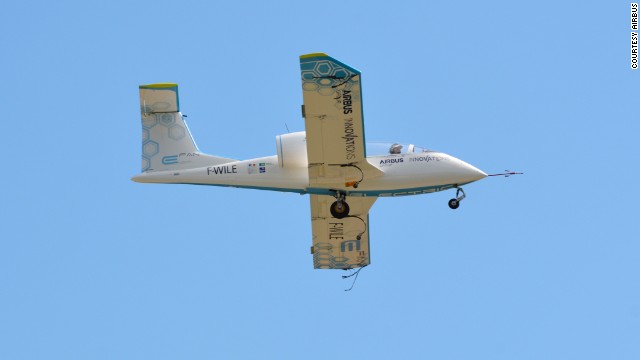
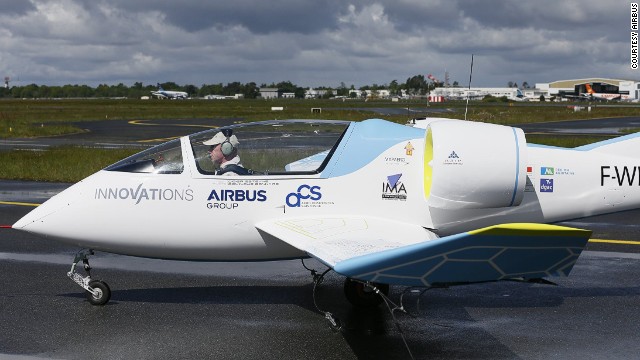
The E-Fan, Airbus Group’s all-electric general aviation training aircraft, was honored with the prestigious Personal Aircraft Design Academy (PADA) award and trophy on August 1 at the AirVenture Oshkosh Airshow here. The PADA Trophy is awarded each year by the Comparative Aircraft Flight Efficiency (CAFE) Foundation to the world’s best personal aircraft designers and engineers.
The two-seater training aircraft, developed by Airbus Group Innovations – the corporate research and technology network of Airbus Group – received the PADA award for its demonstrated commitment to advancing technology for future aircraft and research in the field of electric aircraft.
In accepting the award, John O’Leary, Vice President of Engineering at Airbus Americas Engineering, Inc. noted, “Throughout Airbus Group we are exceedingly proud and honored to be recognized by CAFE Foundation for the design and technology behind the E-Fan.”
“We believe the E-Fan represents the future of aviation and this award solidly reinforces our belief and commitment.”
The E-Fan is an integral part of Airbus Group´s plan for developing its vision of the future of aviation. The successful public flight test of the E-Fan demonstrator in April, 2014 marked a milestone in the research and design work by Airbus Group Innovations toward more electric and hybrid aviation.
The aircraft was also successfully demonstrated at the Farnborough Airshow in the UK before tens of thousands of attendees.
Next steps for the E-Fan design team involve ensuring the development, certification and production of the aircraft, for which a production concept, the E-Fan 2.0, has been proposed by Airbus Group and its partners.
PADA is part of the CAFE Foundation, a U.S. non-profit aviation development and flight test organization. The organization supports experimental aviation activities which promote the development of highly efficient aircraft.
Past recipients of the PADA award include Elbert “Burt” Rutan, designer of the record-breaking Voyager aircraft – the first plane to fly around the world non-stop without refueling.
Airbus Group Press release


Saturday, 2 August 2014

Airbus A350 goes on world tour ahead of Qatar delivery

Airbus has announced that its newest airliner, the Airbus A350-900, is in its final stage towards certification before the first plane is delivered to Qatar Airways later this year.
The aircraft is currently undertaking route proving tests which are designed to demonstrate readiness for airline operations and will include high airfield performance, auto-landing trials, and airport turnaround and handling services.
Some flights will have passengers on board, Airbus said, adding that the A350 world tour itinerary includes 14 major airports worldwide and one route via the North Pole.
The world tour using A350 MSN5 test aircraft forms part of the route proving for certification campaign.
The A350 flights will be operated by Airbus flight crews with the participation of Airworthiness Authority pilots from the European Aviation Safety Agency (EASA).
The tests form part of the last trials required for aircraft Type Certification scheduled for Q3 this year. The first airline delivery, to Qatar Airways, will follow towards the end of the year.
The three week trial started earlier this week in Toulouse, France, with the final trip taking in the Qatari capitl of Doha.
Today five development A350s are flying and are actively involved in the intensive flight test programme, which has already reached over 540 flights and 2,250 flight hours.
By the end of June, the A350 XWB had won 742 orders from 38 customers worldwide.

Friday, 1 August 2014

Airbus, Boeing wide-body jet battle triggers warnings of oversupply

Airbus's summer sales campaign with the new A330neo airliner has triggered warnings of potential oversupply in the wide-body market and of a bruising price battle as the older-generation model undercuts rival Boeing's 787 Dreamliner. Two weeks after Airbus announced a revamp of its A330 at the Farnborough Airshow, the battle for wide-body sales is heating up as Delta Air Lines seeks to renew part of its fleet.
The head of the U.S. carrier is so confident of getting a bargain he began negotiating in public, saying he would take the A330neo for barely a third of its $275 million official price. His "high 70s, low 80s" bid was below the market value of such jets - but not by a massive margin, analysts said.
The aerospace industry is focusing on squeezing the maximum life out of existing products following some expensive upsets, including delays and technical problems on the 787 and Airbus's A380 superjumbo. Airbus has upgraded the A330, and Boeing has updated its larger 777, even as both companies pour billions into developing next-generation models such as the 787 and the forthcoming A350.
But big jets bring proportionally bigger risks.
Now a debate is growing over whether the airline market can absorb the industry's older models at the same time as state-of-the-art new ones. That, analysts say, could have a bearing on pricing and margins right across the industry.
"I think particularly in the wide bodies, the market is looking overheated. The herd is running, and the A330neo is the latest example: the market wants the airplane," said Jerrold Lundquist, managing director of the Lundquist Group, who advises private equity investors in aerospace. "There appears to be demand for it now, but it just adds to the ordering.”
Such warnings come on top of investor concerns that a recent boom in aircraft demand is peaking, causing the sector to lag global stocks by 4 percentage points since Farnborough.
"If everyone persists in going full throttle, there could be serious problems at the end of decade," said Richard Aboulafia, vice-president at Virginia-based consultancy Teal Group.
Airbus and Boeing, the world's only manufacturers of large jets, both dismiss talk of an aircraft 'bubble'.
Over the next 20 years, they both see room for over 4,500 jets worth $1 trillion in the 250-300 seat category, where most A330s and 787s are sold. That makes it the largest part of the wide-body jet market by volume and vital to their business.
Buyers of the A330neo and 787 say there is room for both.
"I think there is a nice match. Is it a perfect match? That depends on the how the world economy goes, but when we look at the supply-demand curve, it looks fine to us," said Jeff Knittel, president of U.S. lessor CIT Transportation.
The aircraft may indeed find homes, analysts say, but the question is at what price and whether both planemakers can meanwhile preserve pricing power for their newer jets.
Airbus says it can sell its A330 for 25 percent less than a 787 - the main 787 model is worth $257 million at list prices - and that it can do this without eroding sales of its own A350.
Boeing's business case for the 787 assumed a large premium for carbon-fibre technology over previous metallic jets. It says it can compete with the A330 on value rather than lower prices.
"We think what customers are really interested in is efficiency and lower operating costs in the long term. Operating costs that you pay day in and out are what drive profitability year in and out,” said John Wojick, senior vice president, global sales & marketing, at Boeing Commercial Airplanes.
BOEING OPTIONS
Behind the scenes, many say Boeing is in a mood to fight.
It is expected to compete aggressively to prevent strategic customers from choosing the A330neo over the 787 and trimming its market-share advantage for high-margin, long-haul jets.
To win some flexibility, Boeing may change tactics by introducing segmented 787 pricing to offer discounts to airlines that don't need the aircraft's long range.
But the A330's refusal to die may also force Boeing to renew an attack on costs within the company and its supply chain so that it can shave prices further without sacrificing margins.
Even then, Boeing is expected to look seriously at whether it needs to increase supplies of the 787 to avoid being left out of the market, as Airbus seeks to add to 127 provisional sales.
Boeing is producing 10 787s a month. It plans to increase this to 12 a month in 2016 and 14 by the end of the decade.
Its options include accelerating that build-up or adding an extra step in order to bring production as high as 16 a month.
Some industry-watchers do not rule out a cautious increase in overbooking. The practice of selling more than you make to insure against default is widely used in smaller jets, but is rare for bigger models because they are harder to switch around.
Boeing's Wojick declined to comment on specific options.
His Airbus counterpart John Leahy said he was "not at all" worried about the A330neo destabilising margins or supplies.
"In 2008/9 people were heralding cuts in aircraft production of 35 to 45 percent; they were absolutely certain production cuts were required. What happened? Production wasn’t cut.”
Despite the concerns, some analysts say the jet market, once subject to wild swings, itself has the means to prevent a glut.
Recent output delays have left some older aircraft flying and their retirement would help absorb the new supply, said Adam Pilarski, senior vice president at U.S. consulting firm Avitas.
Despite bitter exchanges at the air show, he doubted Airbus and Boeing would allow themselves to slip into a price war of the kind many people believe they have waged on smaller jets, where they face not just each other but also new competition.

"If Airbus and Boeing have rational thoughts, they should realize there is no competitor there. So why worry, why fight?"

Tuesday, 29 July 2014

Airbus Terminates Sale Of Six A380s To Skymark

Airbus has terminated an agreement to deliver six A380s to Skymark Airlines after the Japanese discount carrier struggled to raise enough cash to pay instalments on the aircraft.
In a briefing in Tokyo before Airbus's announcement, Skymark's CEO and chief investor, Shinichi Nishikubo, said that Airbus had refused to consider changes to the 2011 purchase agreement, including reducing the number of aircraft or offering smaller planes instead and had notified it of the termination in a faxed message on Sunday.
"We didn't get the chance to sit down and have a formal discussion," Nishikubo said.
The termination marks a setback for Airbus in Japan after it won its first order from Japan Airlines (JAL) last year which agreed to buy more than 30 A350s.
Airbus has struggled to win market share from rival Boeing Co which dominates with around an 80 percent market share helped by strong ties to local aircraft makers such as Mitsubishi Heavy Industries, which make major portions of its jets.
Losses incurred at Skymark as it grapples to win market share from Japan's two dominant carriers, ANA and JAL, meant it was unable to convince lenders to finance the purchase of the six A380s. It had planned to use them for discount business-class only international flights.
Skymark is unlikely to recover JPY¥26 billion (USD$255 million) in instalments it has already paid to Airbus, Nishikubo said. He plans to hold talks with Airbus regarding cancellation fees, he added.
The Skymark cancellation means that no Japanese carrier will now fly the A380. Both JAL and ANA have said they are not interested in buying the largest class of passenger aircraft.

Sunday, 20 July 2014

Qatar Airways is demanding compensation from Airbus

Qatar Airways is demanding compensation from Airbus for failing to deliver its A380 aircraft on time, the airline's boss said on Tuesday, calling the delay "absolutely disappointing".

The first of 13 A380 superjumbos ordered by Qatar was scheduled to be delivered in May and exhibited during the industry's key trade show at Farnborough in Britain.

"There are issues with the interior and exterior of the airplane," said Akbar al Baker, the airline's chief executive, elaborating on the reasons for the delay.

"We are a very demanding customer, we want everything to be absolutely perfect. It is absolutely disappointing to Qatar Airways."

Al Baker said the airline is seeking compensation for the loss in earnings caused by the delayed delivery, but would not go into details of the sum sought.

The Gulf carrier is one of Airbus's biggest clients.

Ahead of the Farnborough airshow, it signalled its interest in ordering several additional A380 superjumbos and A330 mid-size widebody aircraft.

Friday, 4 July 2014

Airbus lags behind Boeing

The European aircraft manufacturer Airbus was behind its U.S. rival Boeing in net sales recorded during the first half of the year, despite selling more than 200 aircraft in the unexpectedly busy month of June.

Company data released on Friday showed Airbus posting 515 orders between January and June, or 290 when adjusted for cancellations.
Boeing on Thursday reported 181 deliveries in the second-quarter, bringing its total for the year to 342.

In terms of deliveries, Airbus is also behind its rival with 303 aircraft delivered to client companies against 342 for Boeing.
The Toulouse-based company Airbus included the cancellation of 70 wide-body A350 jets by Dubai's Emirates, which had been announced earlier in June.

Tuesday, 1 July 2014

Qatar Airways CEO Akbar Al Baker threatens to halt Airbus orders if slots denied


Qatar Airways could reconsider ordering Airbus aircraft if it could not obtain landing rights - or slots - at European airports, Chief Executive Akbar Al Baker told a German newspaper in an interview. 

"If they (European airport slots) are limited further, we will stop buying European aircraft. We have 186 orders at Airbus. What impact would that have on German jobs?" the Handelsblatt daily quoted Al Baker as saying in its Tuesday edition. 

Fast-growing Middle East airlines such as Qatar and Emirates have said that European governments were seeking to restrict fair competition by giving airlines based closer to home preference when awarding airport slots. 


Emirates has sought for years to obtain permission to fly to Berlin and Stuttgart in Germany, and Al Baker told Handelsblatt that he had been approached by representatives of airports in Hamburg and Duesseldorf asking for Qatar to add routes there. 

Tuesday, 24 June 2014

Airbus hiring non-destructive testing technicians for A320 final assembly line in Mobile

Airbus Americas is seeking two non-destructive testing technicians for its A320 final assembly line under construction at Mobile Aeroplex at Brookley.
NDT Technicians are responsible for examining and testing materials and components to ensure proper performance and reliability using testing processes that do not damage the structure of the object being tested.

Starting pay for the hourly position ranges from $24.50 to $41.75 depending on skills, experience and education.
The positions require a minimum of nine months training abroad and an associate's degree in aviation, mechanical or electrical engineering or an equivalent combination of education and experience using testing equipment is preferred. 

Among other qualifications, candidates should have at least three years of experience in setting up and conducting tests on parts and materials as well as analyzing and reporting on their findings. 
The aircraft manufacturer also continues to seek structural liaison engineers for the Mobile facility. 

Airbus is currently building its first A320 assembly line on U.S. soil at Mobile Aeroplex, expected to figure prominently in the company’s ability to efficiently fill the mounting backlog for the popular single-aisle aircraft. The $600 million facilityis slated to come online in 2015, deliver its first Mobile-assembled aircraft the following year and employ about 1,000 people when it reaches full annual production of 40 to 50 aircraft by 2018.

The Alabama Industrial Development Training program, Airbus' employment partner,  oversees all employment postings and pre-employment training for the A320 final assembly line in Mobile. For a complete list of available positions associated with the Mobile project as they become available, check the AIDT website regularly.

Monday, 23 June 2014

Airbus about to shut A380 doors on noisy leaks

Airbus has identified a small area on A380 doors where a faulty door seal has been causing some big noise issues on what is a very quiet jet.
Sources said that it had ‘identified and understood the root cause’ of the problem, which achieved notoriety in January after a Singapore Airlines A380 made an emergency landing in Baku, Azerbaijan, after problems with a door seal led to oxygen masks being deployed.
The faulty seal area is to be fixed with a retrofit that can be done during planned maintenance schedules, according to a procedure for which Airbus is preparing to seek EASA approval.
The sources said the retrofit solution was expected to be EASA approved and ready in the near future.
In the meantime A380 users such as Qantas have been carrying out inspections to find any door seal issues before they ‘get noisy’, and have been told to expect the modification program to be rolled out in the shorter term.
So far several hundred A380 doors from both decks have been inspected, with less than 10 percent having been found to be faulty, a figure confirmed publicly by Airbus earlier this month.

Tuesday, 17 June 2014

Airbus A380 superjumbos would be a bad fit

The Airbus A380 won't be flying for Delta Air Lines anytime soon.

That's not a huge surprise, as industry observers have long regarded the superjumbo A380 as a bad fit for the fleet plans at most U.S. carriers. But surprise or not, a Delta executive affirmed that the world's largest passenger jet is not currently being considered by Delta.

"We don't see an application for the A380 in our network," Steve Dickson, Delta's SVP for flight operations, is quoted by Reuters as saying Monday at the 2014 American Institute of Aeronautics and Astronautics Forum in Atlanta.

Dickson adds four-engine planes — such as the A380 — were "not viable" aircraft options for most of Delta's markets, according to Reuters.

"The reliability of the two-engine airplanes and the efficiency of them is just too compelling," Dickson says.

Delta has recently put out to aircraft manufacturers a request for proposals for an order of up to 50 wide-body jets. The order would be to replace Delta's aging Boeing 747 and 767 wide-body aircraft, according to Reuters.

In addition to Airbus' A380, Dickson's comments also would seem to indicate that Delta will be cool on the idea of ordering new models of Boeing's 747, also a four-engine aircraft.

Monday, 16 June 2014

Turkish Airlines close a deal for 15 additional aircrafts


American aircraft company, Boeing, announced on Monday that the price of the 15 additional airplanes ordered by the Turkish Airlines (THY) cost $1,6 billion.

The airlines, which had also ordered 50 737 MAXs, 25 Next-Generation 737s and 20 777-300ER (Extended Range) airplanes last year, announced last week that the delivery of the airplanes will be in 2020.

"Today's deal represents another sign of our continuous growth strategy, with the 737 MAX providing Turkish Airlines with increased flexibility across our ever expanding network," said Dr. Ahmet Bolat, chief investment and technology officer of the THY.

"Our strong partnership with Boeing has been a significant factor in Turkish Airlines' success and we look forward to taking delivery of these highly efficient airplanes," he added.

Turkish Airlines currently serves 254 cities in 106 countries around the world from its base at Istanbul's Ataturk Airport.

Friday, 13 June 2014

Can Boeing Gain from Airbus' Loss?

Gulf carrier Emirates Airline cancelled orders for 70 A-350 airplanes that would have handed over nearly $21.6 billion to Airbus. Earlier, Emirates had agreed to buy 50 A350-900s, the mid-sized version of the aircraft, and 20 A350-1000s, the largest version. Deliveries were scheduled for 2019.

In the duopolistic commercial airplane market, will the order cancellation be boon forThe Boeing Company (BA - Analyst Report)?

Less Competitive Market

Boeing and Airbus dominate the commercial aerospace manufacturing market, with major airlines across the globe using airplanes manufactured by these giants to run their fleet. Canada’s Bombardier Inc. and Brazil’s Embraer S.A. (ERJ - Analyst Report) are also in the commercial race but their presence in the market is negligible compared to the other two.

A-350 Versus 777

The Airbus A-350 model was developed to compete with Boeing’s 777X. A-350 is a twin engine, wide body long range aircraft developed by Airbus. Airbus, has to date, received orders for 742 A-350s with first delivery scheduled for Dec 2014. An A-350 can carry 250 to 400 passengers depending on the variant.

The 777X from Boeing’s 777 family will be the primary competitor for the long range A-350 model. 777X is expected to be more fuel efficient than A-350 and carry 350 to 400 passengers. About 21% of the airplane’s structural components will be manufactured by Japanese companies. The 777X model was launched at the Dubai Air show last year and received 259 commitments from four airline operators.

Brand Loyalty at Work

Was the order cancellation primarily due to the “fleet requirement review" at Emirates Air or was it something else? Emirates Air had placed an order for 150 777X, Boeing's latest wide body plane, at the Dubai Air Show. The order also had an option for 50 additional airplanes with the total value reaching nearly $76 billion at present list prices.

Airline operators worldwide have staunch brand loyalty. They try to keep their fleet as simple and less divergent as possible. This allows the airlines to get better after sales service from the manufacturers and makes the maintenance of aircraft easier. In addition, we have seen bulk orders have historically grabbed hefty discounts from list prices.

So, there is a big probability of Boeing gaining from the Emirates cancellation of Airbus’ order. The fuel efficient long range 777X could be the best addition to the Emirates fleet.

Backlog

Boeing exited first quarter 2014 with a backlog of 5,100 airplanes valued at $374 billion. In April and May, Boeing added orders for 169 more airplanes. The backlog at Airbus is also impressive at 5,514 airplanes at the end of May 2014. So, the bulging backlog suggests that airline operators wait patiently for long periods to get both the model and the brand of their choice.

The Bigger Picture

Given the volume of existing backlog and the ability to steadily win orders, does the loss of 70 airplanes really matter for Airbus? In effect no, but we are talking of billions of dollars here and who really wants to miss out on surefire opportunities?

Per a study from Boeing, there is a huge possibility in the commercial aerospace market. The company forecasts demand for 35,280 airplanes in the 2013-2032 frame, valued at a staggering $4.8 trillion.

Both Boeing and Airbus are investing heavily in research and development to bring out more fuel efficient aircraft to keep their dominance going in commercial airplane manufacturing. In their recent Investor Meet, the Boeing CEO had mentioned that their company would like to replicate Apple Inc.’s (AAPL - Analyst Report) success by developing small increments in future jets rather than making big leaps in technology. “We want to be more like Apple than the apocryphal every 25 years,” he said. What the CEO had in mind was precisely the new 777X – the upgraded version of the 777 – to make big jumps in technology with lesser risk involved.

With no big competitor in sight, and taking nothing away from other existing producers and the latest entrant Commercial Aircraft Corporation of China, Ltd (Comac), an initiative of the Chinese government, we believe Boeing and Airbus will continue to share their dominance in the commercial airline market.

Thursday, 12 June 2014

Airbus's Terrible, Horrible, No Good, Very Bad Day...And What They Can Do To Make It Better

There’s no sugarcoating the very bad news for Airbus (and Rolls-Royce). Emirates’ announcement today that it will cancel its order for 70 A350XWBs represents the worst cancellation ever suffered by the European planemaker, and it may well be the worst order cancellation the industry has ever seen. It clears the way for Emirates to firm up its order for 150 777Xs, which will be biggest jetliner order ever. That will represent a very strong endorsement of Boeing’s 777 roadmap.

Coping with two horrible superlatives in one day is hard, but Airbus needs a way forward. Obviously, the first step is to point out that the A350XWB remains a very healthy program, with a very large order book and superb technical execution. It’s also worthwhile remembering that Emirates, despite its fantastic growth rates, really couldn’t absorb all these planes. Being the biggest A380 customer, the biggest 777 customer, the biggest 777X customer, and one of the biggest A350XWB customers is asking too much of one airline, no matter how fast they’re expanding. Something had to give.

The second and much bigger step for Airbus is to admit they have a problem. Boeing has two families (787 and 777/777X) covering the 240-407 seat waterfront; Airbus has been trying to cover as much of this waterfront as possible with the A350XWB family. That’s a flawed strategy.

This second step requires two decisions, which will have a big impact. The first is to stop pretending the A350-800 has any kind of future. Kill it, and replace it with the A330neo. That will cover the 250-300-seat segment. To put it another way, without an A330neo, Airbus will effectively abandon this segment.

The second move is to start looking at options for the 370-410-seat segment. The history of this market clearly teaches us that the biggest twinjet has a strong advantage, and the 777-9X looks set to be a category killer. Airbus needs to examine its options, considering whether an A350-1000 stretch (a -1100) is technically feasible.

If this stretch isn’t possible, the company needs to consider a clean sheet of paper large twinjet, perhaps a notch larger than the 777-9X. While Airbus CEO Tom Enders has stated that the future belongs to derivatives, they may need to rethink that approach. Even if Airbus won’t have the resources to make a clean-sheet large twin design happen before 2024, they need to start planning for it now. As part of this planning, the company needs to abandon any hope that the A380neo concept has a future. It would divert resources away from a project that matters, and customers simply don’t want quadjets.

Yesterday was bad for Airbus, yet not catastrophic. But failure to take action in this segment of the market could set Airbus up for future disasters that add up to catastrophe.

Wednesday, 11 June 2014

Airbus electric aircraft takes to the skies

Imagine taking a peaceful flight, gliding along without much noise or any fuel, effortlessly descending into the airport without a trace of emissions. Sounds like a dream? It is. But one we can imagine in the not-so-distant future. E-Fan, the brainchild of parent Airbus Group, is a prototype hybrid electric motor glider which will first be used for training pilots for their license at a school in Bordeaux, France, by 2017. It debuted with its first public test flight in April 2014, and the two-seater electric aircraft is powered by two batteries, producing 60 kilowatts of power, which will be able to run for half an hour.

The E-Fan has been a continuous journey of evolution, says chief technical officer Jean Botti. "This is a learning curve to get to the big ones in the future."

It started five years ago when Airbus Group experimented with the Cri-Cri, a tiny plane based on the 1970s Cri-Cri, one of the smallest twin-engine planes in history. Besides the benefits of noise and emissions reduction, the reduced cost of training pilots with the E-Fan is incredible, says Botti. It costs about two cents per hour to fly the electric plane, a number which is up to 20-50 times cheaper than the normal fuel costs of today's aircraft, he says. Ultimately, these savings will get passed on to the customer, explained Botti, as the electric-powered flight training becomes a reality.

What's ahead for electric?

Eventually, the company has its eye on building planes for regional flights, with up to 90 people flying for three hours, although this is still 15-20 years away, says Botti.

"We're not talking about replacing the A380," he says. But the shorter-term goals also include helicopters with hybrid electric technology.

For Airbus Group, much of the investment is being mobilized by the European Commission's "Flightpath 2050" which aims to cut aircraft CO2 emissions by 75%, and noise levels to be reduced by 65% from their 2000 levels. The goal is to make tens to hundreds of these planes, and Airbus Group says it will be designed by schools with apprenticeship programs in order to help raise up the new engineers of tomorrow. The biggest challenge for E-Fan is developing new energy storage. "We cannot afford to stay with the state of batteries today. We need to go much higher in terms of efficiency," says Botti, adding that the company's new research center in Munich, Germany, will have the capacity to do just that.

Alternative planes take off

It's not just Airbus looking to alternative aircraft to help save energy, cut fuel consumption and reduce noise. There are several others developing alternative aircraft with their own success. Recently, the Solar Impulse 2, a fully solar-powered aircraft, was unveiled by a Swiss duo which will attempt to fly non-stop for 120 hours without any fuel next year. Made of carbon fiber, its predecessor, Solar Impulse, smashed aviation records as it succeeded in the first solar-powered overnight flight, lasting 26 hours in 2010. Another creation is the Dutch-designed, German-built Antares 23E, an electric aircraft with 23-meter wings which can glide for 60 kilometers (37 miles). The Antares 23E can climb to 3,500 meters on a single battery charge.

Monday, 9 June 2014

What do billionaires need when they travel?

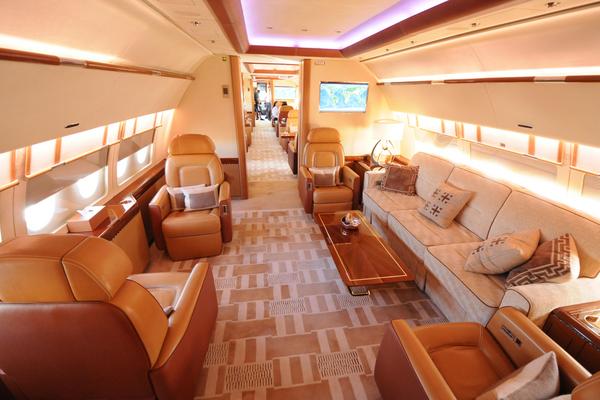
Billionaires have four unique travel “needs,” according to a recent Airbus study, which it contracted out to better compete against Boeing to sell such people more personal jets. Airbus sells personal versions of its jetliners through the Airbus Corporate Jet division, a direct competitor to Boeing Business JetsThe four needs? "Flexibility, privacy, familiarity and tailored experiences," the Airbus report says.
“The need for privacy is a key driver of private jet use,” said the report, adding that the many billionaires want to have their needs taken care of for them when they travel.
“Many billionaires will require their own personal staff to wait on them throughout the flight,” the study said. “Larger entourages of a billionaire’s staff means that there is a need to transport and house larger groups.”
The 28-page report, done by Ledbury Research in London, was accomplished through research into 250 billionaires in China, the Middle East and Russia, complemented by interviews with 25 billionaires.
Boeing has no such study.
"Boeing Business Jet is always communicating with customers; we don’t need a survey to tell us what they require," said Boeing Business Jet spokewoman Karen Crabtree, in response to a query.
The study says the billionaires share these characteristics: “highly determined, invariably very smart, and always service-oriented.” This means, the study said, that they travel like they live. “When billionaires travel, they want to retain the ability to have whatever they want, as they do at home,” one interviewee said. “They are used to living in a certain way, and they want to continue to do that wherever they are.”
The study focused on markets outside the United States, noting that China is expected to surpass 1,000 billionaires by 2017, for the first time nearly equaling the number in the United States. Dallas-Fort Worth is home to 25 billionaires.
So popular are personal versions of Boeing’s 747-8i, the company’s largest aircraft, that they currently make up a substantial portion of Boeing’s remaining backlog for the model.
The Airbus studies makes some interesting generalizations: Russians are more apt to make their wealth more visible than their counterparts in China or the Middle East.
Private jets aren’t quite the status symbol that megayachts are, simply because they’re less likely to be noticed up by media. “The selection has less to do with showing off, since jets are seen as ‘by invitation only,’ the Airbus study said. “Middle East billionaires are the most likely to have status in mind when buying a private jet.”
The study also concludes that younger billionaires are more likely to spend, while older billionaires more likely to preserve.
“Those new to wealth are generally more impulsive, but over time they become more discerning,” the Airbus report says.

Aerospace industry should learn from Google


The aerospace industry must embrace competition from technology companies such as Google and SpaceX which are already having a revolutionary impact on the sector, the head of the Airbus Group told AFP in an interview.

Describing the scale and speed of innovation in Silicon Valley as both "frightening and fascinating," Tom Enders said the increasing digitalisation of the economy was having a profound impact on his company's business.

"I think that in the future our industry will have to work much more closely with these new high-tech companies ... if only because these guys are increasingly intruding on our territory," said Enders, 55, who is half-way through a four-year mandate as CEO of the European aerospace giant.

Enders cited SpaceX, the space transport company founded by former PayPal entrepreneur Elon Musk, whose Falcon launch vehicles are taking on the market-leading Airbus-built Ariane in the commercial satellite launch market.

SpaceX has also mounted a legal challenge to the monopoly held by Boeing and Lockheed Martin for the launch of US government satellites.

Google in April acquired the drone start-up Titan Aerospace which aims to compete with Airbus in making high-altitude unmanned planes that are meant to take on tasks traditionally done by more expensive satellites.

"Aerospace is still a rather young industry but these people are even younger," he said. "And I think there is no debate as to which of us is the more vibrant industry. They are."

"The speed of decision and risk taking and all that is amazing," said Enders, speaking while in Normandy for events to mark the 70th anniversary of the D-Day landings.

A paratroop officer in the German army reserves who is a 25-year veteran of the European defence and aerospace industry, Enders also complained the European Union was stifling innovation and warned it must cut red tape.

"It should make us think as we look at the software industry, when you look at the IT industry at the Microsofts, Amazons, Facebooks, SpaceXs, Yahoos. It is all coming from the US."

Enders said many successful entrepreneurs in the United States were "bright young Frenchmen and bright young Germans" who had been forced to leave Europe to seek venture capital and a dynamic entrepreneurial environment.

Enders was appointed CEO of European aerospace giant EADS in June 2012 and immediately attempted a merger with Britain's BAE systems, a deal that would have seen the group replace Boeing as the world's biggest aerospace and defence company.

After the deal was blocked by Germany, Enders initiated an overhaul of the group's structure which reduced political influence.

He rebranded EADS into Airbus Group, reoganising the company into three divisions by merging the defence and space businesses. He has since led a push to expand the group's business outside of its home base in Europe, notably in Asia, the United States and the Middle East.

Airbus decided in 2005 to set up a joint venture in China to assemble the medium-range A320 passenger jet and the company plans to open an assembly line in 2015 in the southern US state of Alabama.

Enders said Airbus considered the project in the Chinese city of Tianjin a success and that it was vital the company developed a local identity as it expanded into foreign markets.

He said Airbus had allayed reservations from Chinese airlines about taking a China-made plane.

"We have demonstrated that they are just as good, some people say even better, as those assembled in Europe."

The Airbus Group would continue to embed itself abroad through new assembly lines, engineering centres and supply partnerships. "We clearly have beachheads that I hope we will be able to expand."

Enders said it was inevitable that the proportion of the Airbus workforce employed in Europe — currently 90% of the company's 144,000 staff — would fall as the international expansion gathered pace.

But he added: "If that one day would be 80% or 70%, we would still be a European company."

Airbus turnover rose by five percent in 2013 to 59.3 billion euros ($80.9 billion). That compared to a rise of 6.0% to 63.5 billion euros for rival Boeing.