Showing posts with label Airbus A350. Show all posts

Tuesday, 5 August 2014

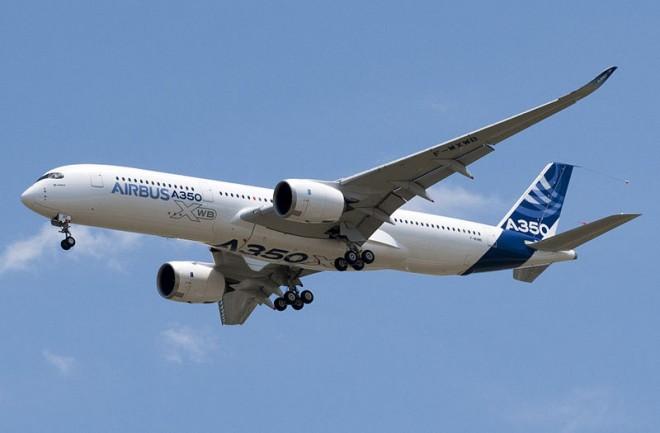
Airbus A350XWB lands in Sydney from Johannesburg on world test flight

THE highly anticipated Airbus A350XWB landed in Australia for the first time this morning as it completes its around the world test flights.
Flying in from Johannesburg to Sydney, it is one of five test versions of the model that is set to be delivered to its first commercial airline, Qatar Airways, at the end of the year.
Lighter and more fuel efficient, the test cabin has 43 business class seats and 223 in economy class. It is set to play a major role in airline operations through Australian airports as it takes over from the A330 and 777.
The test flights are the final part of the aircraft’s certification that is expected to be received in September.
CNN writer, Dean Irvine, flew from Hong Kong to Singapore on part of its around the world tour and tells what it’s like on-board.
Takeoff on one of Airbus’ new A350WXB test planes is a strangely quiet experience.
Powered by two hulking Rolls Royce Trent XWB engines, you’d expect to hear more than just a low whirring noise when tearing down the runway.
But when leaving the ground and heading into the clear blue skies of a Hong Kong morning, there was little else to hear on the newest addition to commercial aviation.
Compounding the hush was the unique nature of the flight
Most of the select few passengers on board flight AIB 206 to Singapore were from the plane’s manufacturer; part of a dedicated team undertaking the final tests to make sure the aircraft is certified to enter service in December with its first customer, Qatar Airways.
The flight was part of Airbus’s A350XWB “route proving” trip, something akin to a world tour where existing and potential customers can take a look at the goods first hand, while the engineers continue to test and tinker.
Named MSN005, the aircraft that flew across the South China Sea, the Malaysian peninsula and Sumatra, is one of only two of the fleet of five test planes kitted out with a full cabin, so the flight was a good indication of what’s in store for millions of passengers in the coming years.
Seating four abreast in the 42-seat business class sections, nine abreast in the two economy cabins, this is the future of long-haul travel as presented by the European plane maker.
The interior view of the flight deck of an Airbus A350XWB test plane.
The interior view of the flight deck of an Airbus A350XWB test plane. Source: AFP
Gleaming cabin
It’s a competitor to Boeing’s 787 Dreamliner and new iterations of the 777 and Airbus hope it’ll take up a sizeable chunk of the world’s expanding fleet of twin-aisle aircraft.
At first glance, the gleaming cabin looks simply like a lovely new plane, but dotted throughout are features that Airbus hopes will set it apart from the competition and impress passengers and airlines alike.
“With fibre optics we’ve integrated the cables for the in-flight entertainment system, moved the control boxes to a panel under the seat and flooring and been able to make the floor flat,” says Roland Naudy, the Aircraft Interiors Marketing Manager.
That could be sweet relief for those who found themselves with an in-flight entertainment box stopping them from stretching out their feet.
A350 XWB stopover in Singapore.
A350 XWB stopover in Singapore
Seat-back displays in economy are 26.9 centimetres, which Airbus say will either be powered by Thales or Panasonic, depending on each airline’s preference. Tablets and smart phones can be plugged in and powered from the seat backs, something that’s becoming a new standard.
The LED lighting on-board has a mind-boggling 16.7 million possible colour permutations, which not even a 16-hour intercontinental trip could cycle through, while the cabin is pressurised to a height equivalent of 6,000 feet instead of a more standard 8,000 feet, which it is claimed reduces the effect of jet lag.
While the plane is touted as being extra wide-bodied (hence the XWB), the height of the cabin without central overhead bins is striking (although that might only be an option for first and business class).
For those that favour a window seat on flights, but find the curve of the sidewall cramps their sleep, the new plane has one of the flattest in the business, so cricked necks might also be a thing of the past.
Another little touch is that the bathroom light that comes on and then dims when the door is opened.
Touching down in Frankfurt.
Touching down in Frankfurt. Source: Supplied
Extreme temperature tests
For the most part the plane looks ready to come into service tomorrow, but throughout there are hundreds of sensors relaying information to a flight test station set up in the middle of the rear economy cabin.
Two test engineers spent the flight poring over the data, gathering up to 120,000 parameters. Everything, from temperature at certain points in the cabin to the fuel flow, could be relayed live back to Airbus HQ in France.
Further route-proving flights to Africa and Australasia are scheduled, and while the flight-worthiness tests have been ongoing for more than a year — including extreme temperature tests in the Arctic, stalls, and aborted takeoffs at full speed — fitting out the interior to clients tastes is a long process too.
“We expect that be around 10 months,” said Didier Nasarre, head of customer program.
In fact, he said, it’s been closer to 20 months for the first customer as everything needed to be done more or less from scratch.
Landing in Johannesburg before departing for Sydney. Picture: Airbus.
Landing in Johannesburg before departing for Sydney. 
From the height of counters in the galley to the type of carpet, every detail is examined and evaluated by airlines, said Nasarre.
The plane is made of 53 per cent composite materials helping its fuel efficiency.
The A350’s swooped back winglets could make it as recognisable a sight at airports around the world as the crenellated engine covers of the Dreamliner.
“Basically if a plane looks good, it flies well,” said Henry Craig, a pilot for Cathay Pacific, as he peered out the window at the curvy wingtips.
“I’m a fan of beautiful things and that is a thing of beauty.”
The A350 will come in three sizes, the A350-800, A350-900 and A350-1000, offering between 276 and 369 seats. As of July there were 742 orders from 38 airlines.


Tuesday, 24 June 2014

Emirates to revisit A350 order

Airbus is to get a second chance to sell its new A350 aircraft to Emirates Airline after the fast-growing Gulf carrier revealed it would take a fresh look at the case for buying the long-range passenger jet in a head to head contest with Boeing’s 787 Dreamliner.
Airbus suffered a serious blow earlier this month when Emirates cancelled an order for 70 A350 jets, worth $16 billion (Dh58.75 billion) at catalogue prices when the deal was announced in 2007.
Emirates was supposed to be a launch customer for the A350, due to enter service later this year, and the airline’s decision not to proceed with its order was the Toulouse-based aircraft maker’s largest ever cancellation. Airbus’ shares were hit, as were those of Rolls-Royce, which makes the jet’s engines.
Tim Clark, Emirates’ president, told the Financial Times that the airline would hold discussions with Airbus and Boeing either late this year or next year about the merits of buying the A350 or the Dreamliner.
He said the Dubai-based carrier was interested in purchasing between 50 and 70 wide-body, twin-engined jets capable of flying on regional routes in the Middle East, plus to cities in Africa. The order — which could be worth at least $18 billion at catalogue prices — looks set to be a fiercely contested battle between Airbus and Boeing.
Emirates’ planned move is a boost for Boeing, because the carrier has never placed an order for the Dreamliner.
Two people familiar with the situation said Emirates decided to drop its A350 order made in 2007 because it had concerns about the jet’s specification and performance.
Clark, who declined to comment on the reasons for the cancellation, said: “At the end of this year, beginning of next year, we will re-engage with Airbus on this aeroplane [the A350]. We will also engage [with Boeing about the Dreamliner].”
He stressed Emirates had not intended to damage Airbus or Rolls-Royce with its A350 order cancellation, but said the airline wanted to buy a “mature” aircraft.
The risks associated with being early airline customers for the Dreamliner, which entered service in 2011, were highlighted last year when the entire fleet was temporarily grounded after batteries burnt on two aircraft. Modifications were subsequently agreed with regulators.
Both the A350 and the Dreamliner have involved step changes in aircraft technology, partly because they are mainly made from lightweight carbon composites rather than traditional aluminium, to reduce fuel burn.
Emirates is the world’s largest operator of the Airbus A380 superjumbo, and Boeing’s 777 wide-body jet, which carry about 500 and 400 passengers respectively on long-haul routes.
Clark said these two aircraft would be the principal jets in Emirates’ fleet, but said there was room for another carrying between 250 and 300 passengers on regional routes — hence the carrier’s plan to consider the Dreamliner and re-examine the A350.
“When the aircraft [the A350 and 787] are mature, they will be better defined in terms of performance, fuel burn,” he added.
Clark stressed that, whatever Emirates’ decision between the A350 and the Dreamliner, the carrier would remain an important Airbus customer because of its purchases of A380s. It has agreed to buy 140 A380s, and Clark said more could be purchased, partly because Emirates is considering moving to a new airport in Dubai that would enable it to expand its fleet further.
Emirates had 217 aircraft as of March 31, and Shaikh Ahmad Bin Saeed Al Maktoum, President of Dubai Civil Aviation and Chairman and Chief Executive of Emirates airline and Group, said last November the fleet could eventually consist of 450 jets.
Clark rejected some analysts’ suggestions that Emirates had dropped its A350 order made in 2007 because it was having to rein in expansion plans because of the economic slowdown in emerging markets.

Wednesday, 18 June 2014

PICTURE: A350 wraps up hot-weather test in UAE

Airbus has completed hot-weather testing of its A350-900 following several days of flights at Al Ain in the United Arab Emirates.
The Rolls-Royce Trent XWB-powered airframe, MSN3, had headed out to Al Ain late on 11 June, and subsequently carried out a number of test flights over the Persian Gulf.
Airbus says the operation focused on engine behaviour and performance in high-temperature conditions, and checks on systems such as the cooling equipment. The tests included heat-soak, in which the A350 was parked in the sun for several hours.
Meteorological data for Al Ain shows temperatures reached 48C while MSN3 was positioned at the airport.
Middle Eastern carrier Qatar Airways is the launch customer for the type, which also has orders in the region from Etihad Airways, Kuwait Airways and Yemenia.
Airbus is intending to secure certification for the A350 in the third quarter. The test fleet has accumulated more than 2,000h in over 460 flights, with the final aircraft, MSN5, yet to fly.

Thursday, 12 June 2014

Airbus's Terrible, Horrible, No Good, Very Bad Day...And What They Can Do To Make It Better

There’s no sugarcoating the very bad news for Airbus (and Rolls-Royce). Emirates’ announcement today that it will cancel its order for 70 A350XWBs represents the worst cancellation ever suffered by the European planemaker, and it may well be the worst order cancellation the industry has ever seen. It clears the way for Emirates to firm up its order for 150 777Xs, which will be biggest jetliner order ever. That will represent a very strong endorsement of Boeing’s 777 roadmap.

Coping with two horrible superlatives in one day is hard, but Airbus needs a way forward. Obviously, the first step is to point out that the A350XWB remains a very healthy program, with a very large order book and superb technical execution. It’s also worthwhile remembering that Emirates, despite its fantastic growth rates, really couldn’t absorb all these planes. Being the biggest A380 customer, the biggest 777 customer, the biggest 777X customer, and one of the biggest A350XWB customers is asking too much of one airline, no matter how fast they’re expanding. Something had to give.

The second and much bigger step for Airbus is to admit they have a problem. Boeing has two families (787 and 777/777X) covering the 240-407 seat waterfront; Airbus has been trying to cover as much of this waterfront as possible with the A350XWB family. That’s a flawed strategy.

This second step requires two decisions, which will have a big impact. The first is to stop pretending the A350-800 has any kind of future. Kill it, and replace it with the A330neo. That will cover the 250-300-seat segment. To put it another way, without an A330neo, Airbus will effectively abandon this segment.

The second move is to start looking at options for the 370-410-seat segment. The history of this market clearly teaches us that the biggest twinjet has a strong advantage, and the 777-9X looks set to be a category killer. Airbus needs to examine its options, considering whether an A350-1000 stretch (a -1100) is technically feasible.

If this stretch isn’t possible, the company needs to consider a clean sheet of paper large twinjet, perhaps a notch larger than the 777-9X. While Airbus CEO Tom Enders has stated that the future belongs to derivatives, they may need to rethink that approach. Even if Airbus won’t have the resources to make a clean-sheet large twin design happen before 2024, they need to start planning for it now. As part of this planning, the company needs to abandon any hope that the A380neo concept has a future. It would divert resources away from a project that matters, and customers simply don’t want quadjets.

Yesterday was bad for Airbus, yet not catastrophic. But failure to take action in this segment of the market could set Airbus up for future disasters that add up to catastrophe.

Wednesday, 11 June 2014

Rolls-Royce 'Disappointed' as Emirates Cancels Orders for 70 Airbus A350 Aircraft

Emirates Airlines has cancelled an order for Airbus's 70 A350 aircraft, UK aero-engine maker Rolls-Royce has revealed. Emirates placed 50 orders for the A350-900 and 20 for the A350-1000, which were confirmed in 2007, with deliveries due from 2019. Rolls-Royce stated that the cancellation would lead to a £2.6bn hit to its order book. 
"While disappointed with this decision, we are confident that the delivery slots which start towards the end of this decade vacated by Emirates will be taken up by other airlines," read a Rolls-Royce statement. "Demand for the Airbus A350 remains strong, with more than 700 aircraft and 1,400 Trent XWB engines already sold."
"We retain a close working relationship with Emirates and continue to support their 38 Rolls-Royce powered wide body aircraft currently in service," it added.
Meanwhile, an Emirates spokesperson informed BBC that the decision was made after the airline reviewed its fleet requirements. Airbus, who builds the aircraft's body, also suffered heavy losses like Rolls-Royce but stated they are confident new orders in the near future would compensate the loss suffered by the cancellation.
"There's no impact on the programme as deliveries were scheduled to start at the end of the decade," an Airbus spokesman was quoted as saying.
This comes after the company stressed that it is "very confident" in its A350 XWB programme.
"Half a year before entry into service, the A350 XWB order book stands at a healthy 742 firm orders. The A350 flight test campaign is progressing well and is on track for Type Certification in the coming months," an Airbus statement read.
"Interest in the game changing A350 has always been very high with customers. Airbus expects the A350 order book to continue growing in 2014."
A350, which is a competitor to Boeing 787 Dreamliner, has been overwhelmed by years of delays and cost overruns. The two-engine, wide-bodied airliner is the first Airbus jet with both fuselage and wing structures, made primarily of carbon-fiber-reinforced polymer. A350 can carry 250 to 350 passengers in a typical three-class seating layout, or can accommodate a maximum of 440 to 550 people, depending on the variant of the plane.

Emirates Cancels Airbus A350 Order

Airbus lost a major order on Wednesday when Emirates cancelled its purchase of 70 A350s, dealing an unexpected blow to the plane maker and engine maker Rolls-Royce. The decision cuts the order book for Airbus's newest jet, which is due to enter service in around six months, by around 10 percent. Airbus said it followed a "fleet requirement review" as Emirates shifts towards the large A380 superjumbo, for which it is the biggest customer. Emirates was among the first buyers for the A350 when it placed the order for 50 A350-900s and 20 A350-1000s in 2007.
The deal was worth around USD$16 billion at 2007 list prices - or close to USD$22 billion based on the current list price - although launch customers typically negotiate discounts. Emirates was due to start taking deliveries of the A350 in 2019. The first A350 is due to be delivered to Qatar Airways in the fourth quarter of this year. "We are confident that we will sell the (production) slots in the coming months," an Airbus spokesman said. "There's no impact on the programme as deliveries were scheduled to start at the end of the decade."
Emirates has been pushing for Airbus to upgrade the A380 superjumbo with an upgraded engine, after increasing its total orders for the world's biggest passenger jet by 50 in November to 140 planes.
The carrier's chief executive, Tim Clark, said earlier this month that an upgraded A380 could have a 10-12 percent performance improvement and that "we are hoping to move on that pretty soon".
Emirates is also in the process of firming up an order for 150 Boeing 777Xs, of which Emirates has ordered 150 worth USD$76 billion at list prices.
Asked about the A350 order cancellation on Wednesday, an Emirates spokesman said: "The contract which we signed in 2007 for 70 A350 aircraft has lapsed. We are reviewing our fleet requirements."
Airbus said in a statement that it remained "very confident" in the A350 programme and that it expected the A350 order book to grow in 2014.
Rolls-Royce, which is the sole engine maker for the A350, said the Emirates decision would result in a GBP£2.6 billion hit to its order book.
"While disappointed with this decision, we are confident that the delivery slots which start towards the end of this decade vacated by Emirates will be taken up by other airlines," Rolls-Royce said in a statement.