Showing posts with label Emirates Cancels Airbus A350 Order. Show all posts

Friday, 13 June 2014

Can Boeing Gain from Airbus' Loss?

Gulf carrier Emirates Airline cancelled orders for 70 A-350 airplanes that would have handed over nearly $21.6 billion to Airbus. Earlier, Emirates had agreed to buy 50 A350-900s, the mid-sized version of the aircraft, and 20 A350-1000s, the largest version. Deliveries were scheduled for 2019.

In the duopolistic commercial airplane market, will the order cancellation be boon forThe Boeing Company (BA - Analyst Report)?

Less Competitive Market

Boeing and Airbus dominate the commercial aerospace manufacturing market, with major airlines across the globe using airplanes manufactured by these giants to run their fleet. Canada’s Bombardier Inc. and Brazil’s Embraer S.A. (ERJ - Analyst Report) are also in the commercial race but their presence in the market is negligible compared to the other two.

A-350 Versus 777

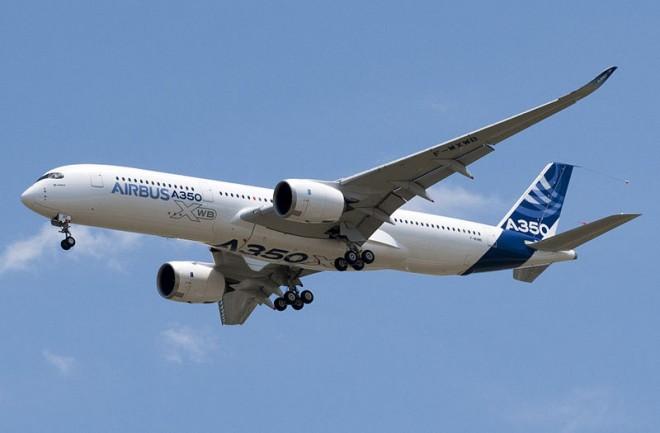
The Airbus A-350 model was developed to compete with Boeing’s 777X. A-350 is a twin engine, wide body long range aircraft developed by Airbus. Airbus, has to date, received orders for 742 A-350s with first delivery scheduled for Dec 2014. An A-350 can carry 250 to 400 passengers depending on the variant.

The 777X from Boeing’s 777 family will be the primary competitor for the long range A-350 model. 777X is expected to be more fuel efficient than A-350 and carry 350 to 400 passengers. About 21% of the airplane’s structural components will be manufactured by Japanese companies. The 777X model was launched at the Dubai Air show last year and received 259 commitments from four airline operators.

Brand Loyalty at Work

Was the order cancellation primarily due to the “fleet requirement review" at Emirates Air or was it something else? Emirates Air had placed an order for 150 777X, Boeing's latest wide body plane, at the Dubai Air Show. The order also had an option for 50 additional airplanes with the total value reaching nearly $76 billion at present list prices.

Airline operators worldwide have staunch brand loyalty. They try to keep their fleet as simple and less divergent as possible. This allows the airlines to get better after sales service from the manufacturers and makes the maintenance of aircraft easier. In addition, we have seen bulk orders have historically grabbed hefty discounts from list prices.

So, there is a big probability of Boeing gaining from the Emirates cancellation of Airbus’ order. The fuel efficient long range 777X could be the best addition to the Emirates fleet.

Backlog

Boeing exited first quarter 2014 with a backlog of 5,100 airplanes valued at $374 billion. In April and May, Boeing added orders for 169 more airplanes. The backlog at Airbus is also impressive at 5,514 airplanes at the end of May 2014. So, the bulging backlog suggests that airline operators wait patiently for long periods to get both the model and the brand of their choice.

The Bigger Picture

Given the volume of existing backlog and the ability to steadily win orders, does the loss of 70 airplanes really matter for Airbus? In effect no, but we are talking of billions of dollars here and who really wants to miss out on surefire opportunities?

Per a study from Boeing, there is a huge possibility in the commercial aerospace market. The company forecasts demand for 35,280 airplanes in the 2013-2032 frame, valued at a staggering $4.8 trillion.

Both Boeing and Airbus are investing heavily in research and development to bring out more fuel efficient aircraft to keep their dominance going in commercial airplane manufacturing. In their recent Investor Meet, the Boeing CEO had mentioned that their company would like to replicate Apple Inc.’s (AAPL - Analyst Report) success by developing small increments in future jets rather than making big leaps in technology. “We want to be more like Apple than the apocryphal every 25 years,” he said. What the CEO had in mind was precisely the new 777X – the upgraded version of the 777 – to make big jumps in technology with lesser risk involved.

With no big competitor in sight, and taking nothing away from other existing producers and the latest entrant Commercial Aircraft Corporation of China, Ltd (Comac), an initiative of the Chinese government, we believe Boeing and Airbus will continue to share their dominance in the commercial airline market.

Thursday, 12 June 2014

Airbus's Terrible, Horrible, No Good, Very Bad Day...And What They Can Do To Make It Better

There’s no sugarcoating the very bad news for Airbus (and Rolls-Royce). Emirates’ announcement today that it will cancel its order for 70 A350XWBs represents the worst cancellation ever suffered by the European planemaker, and it may well be the worst order cancellation the industry has ever seen. It clears the way for Emirates to firm up its order for 150 777Xs, which will be biggest jetliner order ever. That will represent a very strong endorsement of Boeing’s 777 roadmap.

Coping with two horrible superlatives in one day is hard, but Airbus needs a way forward. Obviously, the first step is to point out that the A350XWB remains a very healthy program, with a very large order book and superb technical execution. It’s also worthwhile remembering that Emirates, despite its fantastic growth rates, really couldn’t absorb all these planes. Being the biggest A380 customer, the biggest 777 customer, the biggest 777X customer, and one of the biggest A350XWB customers is asking too much of one airline, no matter how fast they’re expanding. Something had to give.

The second and much bigger step for Airbus is to admit they have a problem. Boeing has two families (787 and 777/777X) covering the 240-407 seat waterfront; Airbus has been trying to cover as much of this waterfront as possible with the A350XWB family. That’s a flawed strategy.

This second step requires two decisions, which will have a big impact. The first is to stop pretending the A350-800 has any kind of future. Kill it, and replace it with the A330neo. That will cover the 250-300-seat segment. To put it another way, without an A330neo, Airbus will effectively abandon this segment.

The second move is to start looking at options for the 370-410-seat segment. The history of this market clearly teaches us that the biggest twinjet has a strong advantage, and the 777-9X looks set to be a category killer. Airbus needs to examine its options, considering whether an A350-1000 stretch (a -1100) is technically feasible.

If this stretch isn’t possible, the company needs to consider a clean sheet of paper large twinjet, perhaps a notch larger than the 777-9X. While Airbus CEO Tom Enders has stated that the future belongs to derivatives, they may need to rethink that approach. Even if Airbus won’t have the resources to make a clean-sheet large twin design happen before 2024, they need to start planning for it now. As part of this planning, the company needs to abandon any hope that the A380neo concept has a future. It would divert resources away from a project that matters, and customers simply don’t want quadjets.

Yesterday was bad for Airbus, yet not catastrophic. But failure to take action in this segment of the market could set Airbus up for future disasters that add up to catastrophe.

Wednesday, 11 June 2014

Rolls-Royce 'Disappointed' as Emirates Cancels Orders for 70 Airbus A350 Aircraft

Emirates Airlines has cancelled an order for Airbus's 70 A350 aircraft, UK aero-engine maker Rolls-Royce has revealed. Emirates placed 50 orders for the A350-900 and 20 for the A350-1000, which were confirmed in 2007, with deliveries due from 2019. Rolls-Royce stated that the cancellation would lead to a £2.6bn hit to its order book. 
"While disappointed with this decision, we are confident that the delivery slots which start towards the end of this decade vacated by Emirates will be taken up by other airlines," read a Rolls-Royce statement. "Demand for the Airbus A350 remains strong, with more than 700 aircraft and 1,400 Trent XWB engines already sold."
"We retain a close working relationship with Emirates and continue to support their 38 Rolls-Royce powered wide body aircraft currently in service," it added.
Meanwhile, an Emirates spokesperson informed BBC that the decision was made after the airline reviewed its fleet requirements. Airbus, who builds the aircraft's body, also suffered heavy losses like Rolls-Royce but stated they are confident new orders in the near future would compensate the loss suffered by the cancellation.
"There's no impact on the programme as deliveries were scheduled to start at the end of the decade," an Airbus spokesman was quoted as saying.
This comes after the company stressed that it is "very confident" in its A350 XWB programme.
"Half a year before entry into service, the A350 XWB order book stands at a healthy 742 firm orders. The A350 flight test campaign is progressing well and is on track for Type Certification in the coming months," an Airbus statement read.
"Interest in the game changing A350 has always been very high with customers. Airbus expects the A350 order book to continue growing in 2014."
A350, which is a competitor to Boeing 787 Dreamliner, has been overwhelmed by years of delays and cost overruns. The two-engine, wide-bodied airliner is the first Airbus jet with both fuselage and wing structures, made primarily of carbon-fiber-reinforced polymer. A350 can carry 250 to 350 passengers in a typical three-class seating layout, or can accommodate a maximum of 440 to 550 people, depending on the variant of the plane.

Emirates Cancels Airbus A350 Order

Airbus lost a major order on Wednesday when Emirates cancelled its purchase of 70 A350s, dealing an unexpected blow to the plane maker and engine maker Rolls-Royce. The decision cuts the order book for Airbus's newest jet, which is due to enter service in around six months, by around 10 percent. Airbus said it followed a "fleet requirement review" as Emirates shifts towards the large A380 superjumbo, for which it is the biggest customer. Emirates was among the first buyers for the A350 when it placed the order for 50 A350-900s and 20 A350-1000s in 2007.
The deal was worth around USD$16 billion at 2007 list prices - or close to USD$22 billion based on the current list price - although launch customers typically negotiate discounts. Emirates was due to start taking deliveries of the A350 in 2019. The first A350 is due to be delivered to Qatar Airways in the fourth quarter of this year. "We are confident that we will sell the (production) slots in the coming months," an Airbus spokesman said. "There's no impact on the programme as deliveries were scheduled to start at the end of the decade."
Emirates has been pushing for Airbus to upgrade the A380 superjumbo with an upgraded engine, after increasing its total orders for the world's biggest passenger jet by 50 in November to 140 planes.
The carrier's chief executive, Tim Clark, said earlier this month that an upgraded A380 could have a 10-12 percent performance improvement and that "we are hoping to move on that pretty soon".
Emirates is also in the process of firming up an order for 150 Boeing 777Xs, of which Emirates has ordered 150 worth USD$76 billion at list prices.
Asked about the A350 order cancellation on Wednesday, an Emirates spokesman said: "The contract which we signed in 2007 for 70 A350 aircraft has lapsed. We are reviewing our fleet requirements."
Airbus said in a statement that it remained "very confident" in the A350 programme and that it expected the A350 order book to grow in 2014.
Rolls-Royce, which is the sole engine maker for the A350, said the Emirates decision would result in a GBP£2.6 billion hit to its order book.
"While disappointed with this decision, we are confident that the delivery slots which start towards the end of this decade vacated by Emirates will be taken up by other airlines," Rolls-Royce said in a statement.