Showing posts with label Airport. Show all posts

Wednesday, 20 August 2014

Chicago airports lacking in efficiency per new report

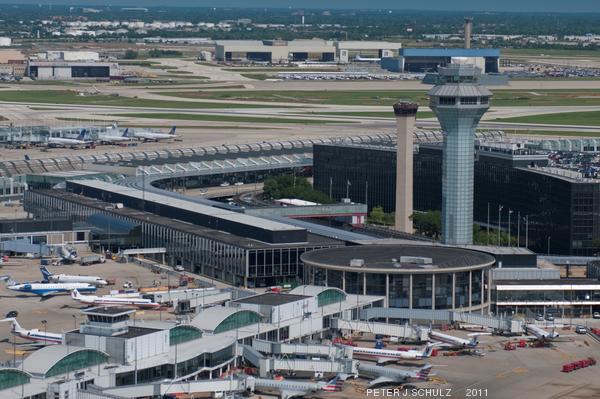
Looking for an airport that operates efficiently? Better not look at Chicago's O'Hare International Airport. Or Midway International Airport either. At least not right now.
That's the unfortunate takeaway from the just-released 2014 ATRS Global Airport Benchmarking Report, compiled by a team of international aviation academics at the University of British Columbia's Sauder School of Business.
Each year the team examines data related to both the operational and management efficiency of some 200 airports in North America, Europe, Asia and the South Pacific and ranks them accordingly.
In the large North American airports category, which includes both O'Hare and Midway, the latest ATRS study found that O'Hare ranked fourth from the bottom among 30 large airports analyzed . Only Reagan National, Los Angeles International and Dulles International ranked lower this year. Midway ranked right in the middle of the group in 15th place.
The top three North American airports in terms of efficiency were Hartsfield-Jackson Atlanta International Airport (which has topped the list for 11 years running), followed by Charlotte Douglas International Airport and Minneapolis/St. Paul International.
The team that conducts the annual study has found several factors that distinguish efficient airports from those that are less so. Noted Sauder School of Business professor Tae Oum, who led the study: "Our report finds that the highly efficient airports are more likely to generate a large share of total revenues from concession and other retail activities in terminal buildings, as well as parking, office rentals and real estate development on airport lands. We can also see that airports that outsource terminal services, ground handling and other services also achieve high efficiency."
The Atlanta airport generated 65 percent of its total revenue from non-aviation activities, while the average for North American airports was about 50 percent.
O'Hare's ranking could begin to improve, however, as the Chicago Department of Aviation has added to — and upgraded — concessions at the airport. A remodeled International Terminal 5 with considerably expanded concessions opened this past spring at O'Hare.

Traffic soaring at Moscow's Sheremetyevo Airport

Moscow’s Sheremetyevo Airport reports it has provided services to 18 million passengers since the beginning of the year.
Passenger traffic on international airlines from January-July reached 10.55 million, and on domestic airlines increased by 23.7%, totalling 7.3 million, the gateway says.
The volume of passengers provided with services in July 2014 grew by 8.2% compared with the same period last year.
This included three million 371,000 passengers, and traffic on international airlines in July reached two million passengers, and on domestic airlines it rose by 25.5%, reaching 1.3 million.
In January-July 2014 Antalya, Paris, Prague, and Beijing were among the most popular foreign destinations, with St. Petersburg, Simferopol, Sochi, and Krasnodar among the most sought-after domestic destinations.
The bulk of passenger-traffic gains observed in the seven months was provided by Aeroflot, Transaero, Donavia, Nordwind, Orenburg Airlines, Nordavia, and Air France.
In January-July 2014, Sheremetyevo Airport handled 146,966 take-off-and-landing operations, which is 5.9% more than in the same period in 2013, while in July, the overall volume of take-off and-landing operations grew by 2.3%, reaching 23,438 operations.

Tuesday, 19 August 2014

JetBlue to Add Even More Flights at Ronald Reagan Washington National Airport


JetBlue Airways (NASDAQ: JBLU) today announces new twice-daily nonstop service from Ronald Reagan Washington National Airport (DCA) to Jacksonville, Fla. (JAX). The new route will launch on December 18, 2014, the same day the airline also introduces new low fare, nonstop service from DCA to two other Florida destinations: Fort Myers (RSW) and West Palm Beach (PBI).

Jacksonville marks the sixth new destination from DCA to be launched this year. On June 19, JetBlue launched nonstop service to Charleston, SC (CHS), Hartford, Conn. (BDL), and Nassau, Bahamas (NAS). Additionally, JetBlue will also connect Jacksonville with Fort Lauderdale (FLL) as of October 29, 2014.

Special introductory fares are available today through August 20, 2014, starting at $79 one way for travel between January 6 and February 11, 2015 (a), excluding Fridays and Sundays.

"Ronald Reagan Washington National Airport is a vital part of the JetBlue network and we are pleased to continue to grow our presence here. Besides easier access to JetBlue flights from the heart of the region, customers are enjoying our award-winning customer service and low fares. With a sixth new service within just six months, we will offer up to 30 daily nonstop flights out of DCA by the end of the year," said Rob Land, JetBlue's Senior Vice President of Government Affairs and Associate General Counsel.

JetBlue's Schedule between Ronald Reagan National to Jacksonville, effective December 18, 2014:

DCA - JAX    JAX - DCA
09:25 a.m. - 11:25 a.m.    09:10 a.m. - 10:59 a.m.
04:10 p.m. - 06:09 p.m.    12:30 p.m. - 02:21 p.m.

JetBlue has successfully carved out a niche among competitors by focusing on serving the customer who is under-served by other airlines and by delivering unparalleled value to travelers with its core product offerings. JetBlue has also been cited by an independent study from the Massachusetts Institute of Technology (MIT) as the low-cost carrier that lowered fares the most when it began service in a new U.S. market in 2012. The JetBlue Effect, MIT says, lowered fare $32 one way on average (b).

Tuesday, 12 August 2014

Airport Tests New Way to Avoid Deadly Bird Strikes

When birds and planes collide, the results can be deadly. That's why airports around the world work hard to keep birds away, even resorting to shooting or poisoning large flocks.
One Ohio airport is now experimenting with a new, gentler way to avoid bird strikes: planting tall prairie grass.
Heavy birds like geese — which cause the most damage to planes — are believed to avoid long grasses because they fear predators might be hiding within. So officials at Dayton International Airport are converting up to 300 acres of the airfield's 2,200 non-aeronautical acres into prairie grass. The goal is, by the end of this year, to plant the tall grass under the takeoff and landing paths.
There are more than 10,000 airplane bird strikes a year in the U.S. Most do little or no damage to the plane. The most frequent problem is damage to the engines. The FAA estimates that such damage costs the industry $950 million a year.
But some cause catastrophic damage. The forced landing of US Airways Flight 1549 in the Hudson River in 2009 — often called The Miracle on the Hudson — occurred after Canadian geese were ingested in both engines, causing the plane to lose power. Nobody died when the plane glided into the river.
The passengers of Eastern Air Lines Flight 375 in 1960 weren't so lucky. The plane struck a flock of European starlings during takeoff. All four engines were damaged and the aircraft crashed in Boston harbor; 62 people died.
Globally, wildlife strikes have killed more than 250 people and destroyed over 229 aircraft since 1988, according to the Federal Aviation Administration. In the past 23 years, there were 25 fatalities and 279 injuries linked to wildlife strikes in the U.S.
A little more than half of bird strikes occur from July to October, which is when young birds leave nests and fall migration occurs.
Between 2001 and 2013, there were 218 wildlife strikes at Dayton. The majority involved doves, pigeons, sparrows and other small birds that didn't cause severe damage. The airport sees 56 commercial planes landing and taking off each day. Two-thirds of those are smaller regional jets.
Airports often buy large parcels of adjacent land to create a buffer zone and limit the number of local residents affected by loud jet engines. Newer airports tend to be built next to tracts of empty land. Those large fields happen to make great rest stops for migrating birds.
"We operate airports in a smaller and smaller environment," says Terrence G. Slaybaugh, director of Dayton's airport. "If we are going to protect the long term use of airports in an increasingly populated area we need to be less intrusive and find ways to contribute in a positive way to our surroundings."
The thick grass has other benefits: preventing water runoff, taking carbon dioxide out of the air and requiring only one mowing every three years.
Bird lovers are also excited about the use of non-lethal methods to keep birds away from the airport.
The airport's neighbor, the Aullwood Audubon Center and Farm, has been working closely with aviation officials on the tall grass project.
"It's a watershed moment. Our airport is embracing it," says Charity Krueger, executive director of the center.
Still, Dayton airport has to prove that the tall grass is the best approach. The tactic could backfire: in the past, the FAA notes, such grasses have led to increased rodent populations, a food source for raptors. Dayton's initial test will run for three years.

Sunday, 10 August 2014

Dubai's Al Maktoum sees huge Q2 air traffic surge

Passenger and cargo traffic at Al Maktoum International at Dubai World Central (DWC) registered a major surge in the second quarter of 2014 following the temporary shift of an estimated 600 flights per week from Dubai International during a major runway upgrade project.
Between April and June, DWC recorded 475,992 passengers, a sharp rise from 102,137 passengers that used the facility in the first quarter this year.
The spike resulted from the temporary operation of select flights of a number of airlines including flydubai, Malaysian Airlines, Royal Brunei, PAL Express, Qatar Airways, Gulf Air, Jazeera Airways, and East Horizon.
Freight volumes also surged by triple-digits in the second quarter, recording 199,751 tonnes, up 308 percent from the 48,955 tonnes recorded during the corresponding period in 2013. The year to date freight volumes reached 276,567 tonnes, up 168.7 percent from 102,929 tonnes recorded during the first half of 2013.
The spike in cargo volumes this quarter resulted from the move of all Emirates SkyCargo freighter operations to DWC in May 2014. This follows a similar move by several scheduled freighter services including Cathay Pacific, Qatar Airways, Ethiopian Airlines and Cargolux that moved their operations to DWC late last year.
Propelled by the increased activity, aircraft movements also climbed sharply in the second quarter of 2014 to 13,697 movements, up 123 percent from the 6,133 movements in the corresponding period of 2013.
The year to date flight movements reached 23,662, compared to 10,237 during the first half of 2013, an increase of 131.1 percent.
Paul Griffiths, CEO of Dubai Airports, said: “We were particularly pleased with the airport’s ability to smoothly absorb the rush in traffic and impress passengers with its speed, convenience and efficiency.
"While the growth in cargo will continue at DWC, we expect passenger traffic to return to Q1 levels in the next quarter as all temporary operations have already returned to Dubai International.”

Wednesday, 6 August 2014

Emirates today arrives in Chicago

Emirates (Dubai) today (August 6) will arrive in Chicago. The fast-growing airline commenced a daily nonstop passenger service to Chicago’s O’Hare International Airport from Dubai.
The new service will operate as flight EK 235, departing from Dubai International airport at 9:45 a.m. (0945) and arriving at O’Hare at 3:25 p.m. (1525) The return flight, EK 236, will depart O’Hare at 8:35 p.m. (2035) and arrive in Dubai at 7:10 p.m. (1910) the next day. The route will be served by the U.S.-built Boeing 777-200 LR aircraft powered by GE90 engines.
In addition to passenger service, the Chicago-Dubai flight will carry up to 17 tons of cargo per flight and increase trade links between the two cities. Emirates began operating cargo service to Chicago in 2013. Currently, Emirates SkyCargo flies a twice-weekly, dedicated freight service out of O’Hare that carried nearly 12,000 tons of cargo last year.
Emirates began passenger services to the U.S. in 2004 with services to New York. The airline has steadily added more U.S. routes over the past decade. Chicago is the ninth U.S. gateway to join the Emirates network, following the launch of the Boston service in March. In the past decade, Emirates has flown more than 9 million people to and from the U.S. and is the airline which carries the most amount of passengers between the U.S. and Middle East. To cater to that demand, Emirates is upsizing services on its Dallas/Fort Worth, San Francisco and Houston (Bush Intercontinental) routes to its iconic double-decker A380 aircraft in late 2014.
Emirates is the largest operator of Boeing 777 aircraft in the world, with a fleet of 128 passenger aircraft and 11 freighters. The airline is a launch customer of Boeing’s new 777X. In November 2013, Emirates placed the largest single order in commercial aviation history for 150 777X aircraft valued at $76 billion. Based on the U.S. Department of Commerce’s aerospace export multiplier, this order will support more than 400,000 jobs in the United States.

Wednesday, 30 July 2014

Plane takes off from LaGuardia Airport, returns after smoke reported in cockpit

A plane that took off from LaGuardia Airport returned to the Queens airfield and was evacuated on the tarmac after smoke was seen Wednesday afternoon in the cockpit of the commuter aircraft, the FAA said.

Passengers were evacuated once the smoke was reported aboard Envoy Air Flight 3340, which returned and landed on Runway 22 around 3:20 p.m., the FAA said.

The Embraer 135 was headed for Knoxville, Tenn. with 44 passengers and three crew, none of whom were reported injured, according to WNBC-TV. The passengers were bussed back to the terminal.

The runway was reopened at 4:05 p.m., the FAA said in a statement.

Friday, 23 May 2014

JFK Airport flies high in New York-area survey

New York-area travelers like John F. Kennedy Airport the most and LaGuardia the least, according to a survey by airport advocates. Of the 457 metropolitan travelers surveyed, 42% named JFK as their favorite, 35% Newark and 20% LaGuardia, according to the Global Gateway Alliance, a business group that advocates for airport improvements.

But when asked how airports affected their impressions of the region, 38% reported that they had bad impressions, 37% said airports didn't matter and 25% had a good impression, according to the survey. Opinions can be fickle. The top five airports leaving a good impression were JFK, Newark, Orlando, Atlanta and Denver, according to the survey. But there was some overlap with the worst five: LaGuardia, JFK , Newark, Chicago's O'Hare and Atlanta.

Among the complaints about New York airports, 18% cited security and customs, 15% the lack of Wi-Fi and 12% the poor on-time performance, according to the survey. For improvements, 43% would like free Wi-Fi at the airports and 27% would like better ground-transportation links.

"At a time when the nation is reevaluating its infrastructure, we too must take a long hard look at our airports and take the necessary steps to transform them from 'third world' to first class," said Joseph Sitt, the group's founder and chairman.

The survey came after Vice President Joe Biden compared LaGuardia to a third-world country.

"If I blindfolded someone and took them at 2 in the morning into the airport in Hong Kong and said 'where do you think you are,' they'd say, 'this must be America, it's a modern airport,'" Biden said during a speech in Philadelphia. "But if I blindfolded you and took you to LaGuardia Airport in New York, you must think, 'I must be in some third-world country.' I'm not joking."

New York Gov. Andrew Cuomo announced in January an ambitious $3.6 billion construction project that envisions an entirely new central terminal at LaGuardia, with vast open spaces, restaurants, shopping plazas, new parking garages, free Wi-Fi and other amenities now common in other airports. Cuomo also wants to develop a plan to upgrade cargo operations at JFK.

"LaGuardia airport is ranked as the worst airport in America believe it or not," Cuomo said in his state of the state speech. "That is a disgrace my friends and it is unacceptable and it is going to change. We need to modernize JFK and LaGuardia."

The Global Gateway survey of 457 people in New York, New Jersey and Pennsylvania conducted by SurveyMonkey from April 9 to May 13.

Monday, 19 May 2014

JFK Airport has cellphone parking lot

John F. Kennedy Airport has a designated cellphone parking lot. It's designed to keep motorists off the shoulders of airport roadways as they wait to pick up passengers.

The Wall Street Journal (http://on.wsj.com/1vs5Da1 ) reports that the free cellphone lot has 375 spaces and is close to the terminals. But it is rarely full because it isn't well advertised.

The lot was created in 2007 by the Port Authority of New York and New Jersey.

Police say they encourage drivers to use the lot whenever they find them illegally idling along the roadways where they wait for passengers to call and say they're ready to be picked up.

LaGuardia and Newark Liberty airports are among a handful of airports around the country that don't have cellphone lots.

Wednesday, 14 May 2014

Over 1,000 flights canceled in Chicago after electrical issue, smoke at air traffic facility

About 1,120 flights were canceled Tuesday at Chicago's two major airports after an electrical problem sent smoke into a regional radar facility's control room, forcing officials to temporarily halt all air traffic at one of the nation's busiest aviation hubs. The Federal Aviation Administration said all personnel were evacuated from the radar facility in suburban Elgin at about 11:30 a.m. They were allowed to return about three hours later. The Chicago Department of Aviation said a limited number of landings and departures had resumed by late afternoon.
Elgin Fire Capt. Anthony Bialek said a bathroom exhaust fan in a ceiling overheated and melted insulation on some wires, and smoke was pushed through the facility's ventilation system and into the control room. Bialek said it took about an hour to find the source of the smoke at Chicago Terminal Radar Approach Control, or TRACON. There were no injuries. Controllers at the TRACON facility are responsible for managing the region's air traffic as it leaves and approaches all of the area's airports. Once an aircraft is within about 5 miles of an airport, TRACON workers hand over control to that airport's tower.
Inbound flights already in the area at the start of the shutdown were handled by a backup air traffic facility in the city of Aurora, just west of Chicago. Some flights were diverted to other airports. Aerial TV footage Tuesday afternoon showed a large backup of aircraft along taxiways at O'Hare International Airport. Inside the terminals, people trying to rebook on later flights formed long lines. David Winter of Sarasota, Florida, said he and his wife, Denise, would stay overnight in Chicago after their flight was canceled.
"My wife hates to fly ... so she literally asked me if we could rent a car and drive," Winter said, adding that they ruled it out and were rebooked on a Wednesday flight.
Instead, the retired couple stopped off at an airport cocktail lounge.
"So, obviously, we're not in dire straits," he said.
As of about 3:30 p.m., arrivals at O'Hare were about 75 percent of normal — 72 an hour compared with the normal of about 106 per hour, said Doug Church, a spokesman for the National Air Traffic Controllers Association, the union that represents controllers. Departures were operating normally, he said. O'Hare is the second-busiest airport in the country by numbers of passengers and is a major hub. Around half of passengers there are connecting to other flights. Any disruption to its operations has an enormous ripple effect on the nation's aviation system.
The Chicago Aviation Department said departures were delayed about 90 minutes late Tuesday at O'Hare and 2½ hours at Midway International Airport. A computer glitch at a similar facility last month forced a 45-minute shutdown at Los Angeles International Airport.

Tuesday, 13 May 2014

Heathrow Airport Says New Runway Possible By 2025

Heathrow Airport and rival Gatwick have published revised plans for new runways to increase London's airport capacity, marking the latest stage in a long-running debate over how and where the expansion should take place.
Heathrow, Britain's busiest airport, is competing against Gatwick, the second busiest, plus a second expansion option at Heathrow proposed by Heathrow Hub.
These three shortlisted groups revealed their latest proposals on Tuesday, with Heathrow Airport and Gatwick broadly sticking to earlier cost estimates.
Heathrow Airport said a third runway could now be delivered by 2025, a year earlier than the group estimated last July and bringing it into line with Gatwick's time frame.
Britain's Airport Commission is due to make a final recommendation on where and how to expand London's airport capacity by next summer after a general election.
Politicians and business leaders have said south-east England needs additional runway capacity to help the country remain economically competitive. But runway expansion is unpopular and a decision has been repeatedly pushed back.
Passions ran high during Britain's last election in 2010 over possible expansion at Heathrow due to its proximity to London and the safety and pollution issues this would create.
Plans to expand Heathrow were scrapped in 2010, but in December two expansion options for Heathrow were shortlisted, marking a significant u-turn.
The Commission has also said a plan to build a new airport on the Isle of Grain to the east of London in the inner Thames estuary remains an option, but this is not formally on the shortlist. The Commission will make a decision about whether to include it later this summer.
The cost of Heathrow's plan would be GBP£16.8 billion (USD$28.34 billion), inclusive of a GBP£1.2 billion bill for the government for new road and rail access costs. The balance would be met by debt and equity investment from its investors.
Gatwick Airport, which said in March that it could deliver a new runway by 2025, estimated the cost of its proposal at GBP£7.8 billion. It said there would be no additional cost to government.
Heathrow Hub, led by consultant Mark Bostock and former Concorde pilot William "Jock" Lowe, estimated the cost of its plan, which involves extending one of Heathrow's existing two runways, at about GBP£12 billion, financed by private investment. Heathrow Hub said that the runway extension could be completed by 2023.
Gatwick said its proposal would bring Britain economic benefits of about GBP£80 billion as a new runway at Gatwick would increase competition and bring lower fares. Heathrow estimated it would boost Britain's economy by GBP£100 billion. Heathrow Hub said it would deliver benefits of GBP£45 billion.

Monday, 12 May 2014

NYC area airport workers vote to join union

Several thousand contract workers employed at the New York City area's major airports have voted to join a union after campaigning for better pay and benefits.
The workers cheered Monday as representatives from about a dozen major airport contractors stood and announced their support for joining the union.

Nearly 3,800 workers signed cards expressing their wish to join the 32BJ Service Employees International Union. The workers include baggage handlers, security officers, cabin and terminal cleaners and others.

About 12,000 contracted passenger service workers are employed at John F. Kennedy Airport, La Guardia and Newark Liberty. About 2,300 of them belong to other unions. Another 1,000 workers belong to 32BJ and are employed by other contractors with the Port Authority of New York and New Jersey, which runs the airports.

Wednesday, 7 May 2014

Passenger numbers at Dublin Airport increase by 6%

Passenger numbers at Dublin airport increased by almost 6% to 20.2 million last year, the Dublin Airport Authority’s (DAA) financial results for 2013 have revealed. 
The increase comes as 70% of the airlines operating at Dublin experienced traffic growth. 
“Long-haul traffic was Dublin’s best performer last year, with transatlantic passenger numbers up 13% to a record 1.9 million and traffic to the Middle East also up  13%,” DAA chief executive Kevin Toland said.
Traffic at Cork declined by 3.5% to 2.3 million passengers last year, due to a consolidation in services to central Europe and weaker traffic routes to Britain. 
However, despite the increase in overall passenger numbers, core business profit at DAA decreased by 7% to €26m last year, due to the group’s overseas retail business ARI completing a planned exit from Russia and Ukraine. 
Last year, Dublin Airport’s transfer passengers increased by 36% to 548,000 and they have increased by a further 30% so far this year.  The DAA plans to grow transfer traffic to 2 million per year. 
Securing an equitable resolution to the issues facing the multi-employer IAS pension scheme, which includes employees from DAA, Aer Lingus and SRT, was also cited as a key priority for the company. 
“DAA is actively engaged with the Government appointed Expert Panel investigating the pension issue and we will continue to focus on this critical issue until a sustainable resolution is achieved,” said DAA Chairman Pádraig Ó Ríordáin.
The retirement fund has a deficit €780m which means members face reduced benefits. 
The accounts show CEO Kevin Toland was paid a total package of €387,739 last year, which included a basic salary of €250,000 and pension contributions and other taxable benefits of €137,739.

Friday, 2 May 2014

London Luton airport set for expansion

London Luton Airport is set to be expanded after Luton Borough Council were given the go ahead to grant consent for a proposed project.
The Department for Communities and Local Government, gave approval, to London Luton Airport Operations Ltd and its new owners, Ardian and Aena's £98 million (€115 million) transformation.

The application has been subjected to intense and rigorous scrutiny over the past 12 months from neighbouring councils, independent third party specialists and by the local planning authority,  who twice extended the period required to review the plans.

Before the plans were formally submitted, proposals to improve the airport were subject to two public consultations.

The 65% of respondents who took part in the consultation on LLAOL’s development plans said they supported proposals to develop the airport.

They all stated their support for the economic benefits to Luton and the wider region, and the need to generate 5,100 new jobs, including a contribution to a reduction in youth unemployment.

Construction will take place over three phases and see the expansion, modernization and remodeling of the terminal building including:

- Up to 20 security passenger screening lanes.

- 15 immigration passenger screening lanes.

- Up to eight international and one domestic passenger reclaim belts.

- Increased retail, catering, circulation and seating areas.

- A new two-storey pier.

- Dual the road from the Holiday Inn roundabout to a newly configured road system in front of the central terminal area.

- Build a new parallel taxiway to unlock capacity for an additional six million passengers a year from the existing runway.

- Build a new multi-storey car park.

Glyn Jones, managing director of the airport says: “We are delighted that after a thorough process, the council can proceed to grant planning permission for London Luton.

“We see this as a real vote of confidence in the airport and its future, underlining the determination of our new owners, Ardian and Aena, to develop and radically improve London Luton and deliver a better airport experience for our passengers in the years to come.

“The opportunities it brings for the local economy in terms of jobs and investment are significant, and Luton can now press ahead with making its local airport bigger and better, while remaining a good neighbour.”

Spain-based Aena, bought London Luton last year, and hopes to get approval to boost the capacity to up to 18mppa.

It is London's 4th biggest airport and in 2013 handled 9.7 million passengers, but has capacity for up to 12 million.

Sunday, 27 April 2014

Flyer takes wrong flight without a boarding pass from Mumbai airport

In a bizarre sequence of events that amounts to a serious breach of security, a 37-year old man who did not have an airline boarding pass managed to clear three security checkpoints and fly from Mumbai to Rajkot on a Jet Airways flight last Friday. The man was supposed to take a flight to Nagpur, but boarded the one to Rajkot, that too after leaving behind his boarding pass at the airport. After he reached Rajkot he realized he had flown to the wrong destination and informed Jet officials. The airline remained clueless till then. The incident brings into question the security arrangements at Mumbai airport made by both by the airline and CISF.

"Jet officials flew him back to Mumbai and put him on another flight to Nagpur. It is a serious breach of security, the kind that one thinks could never happen," said a source.

This man had no business being on the Rajkot flight, but none of the security checks in place zeroed in on him," he added. "We are looking into the matter," said a CISF official. At the time of going to press, Jet was yet to respond.

The incident occurred on April 25 after Liju Verghese landed in Mumbai airport from an international flight. He was booked for an onward journey to Nagpur and was supposed to board the 4.11pm Jet Airways flight 9W 2165. Verghese, who was reportedly in an inebriated state, cleared the CISF security check at domestic terminal 1B of the Mumbai airport. With the security-stamped boarding pass and a handbag, he then proceeded to the security hold area to wait for the boarding announcement. Meanwhile, a boarding call was made for the JetKonnect Mumbai-Rajkot flight 9W 4079 scheduled for a 3.25pm departure from gate number A2 of domestic terminal 1C. The passengers were to board the Rajkot flight using an aerobridge.

That is when things spiralled into a different direction. "The man left behind his handbag, which also contained his boarding pass and for some reason proceeded to board the flight to Rajkot," said a source. First, he managed to walk past Jet's customer service staff entrusted with what's called "passenger reconciliation". It is a mandatory security procedure done to ascertain whether the number of passengers who check in for a given flight is equal to the number of passengers who have boarded the aircraft. The airline staffers manually check the seat numbers on each boarding pass and tally it with the data they gather from their check-in desks.

"That he crossed this security check is surprising. For, this was a passenger who was not supposed to be on that flight and those at this security checkpoint are supposed to spot such cases," said a source. Next, Verghese managed to get past the CISF security personnel who check whether the boarding pass and the tags on the hand baggages of passengers have the CISF's security-cleared stamp. Then, prior to entering the aircraft, Jet's security personnel man the doors to verify whether all passengers are carrying the boarding passes for the right destination, whether their boarding passes and baggage tags carry the CISF security stamp. Verghese crossed that barrier as well.

On entering the aircraft Verghese randomly chose a seat and sat down only to be questioned by a passenger who claimed that seat. "He got up and gave the seat to the said passenger. The flight attendant present in the vicinity did not bother to enquire about Verghese's boarding pass to find out his seat number. He was told to occupy any vacant seat available," said the source.

Lastly, a head count of passengers is supposed to be taken to tally it with the number of passengers entered in what's called a Load and Trim sheet. It is essentially a register of weights and their location inside an aircraft. It carries details like the total number of people onboard, total baggage weight, weight of fuel uploaded, etc. "While a final headcount is judiciously taken on international flights, on many domestic flights the practice is not diligently followed," said an official. Had a headcount been taken, they would have figured out that flight had one unaccounted passenger on board—a very serious situation from the security point of view.

It was after the flight landed and the passenger disembarked and found himself in Rajkot instead of Nagpur that the airline realized what had happened. Meanwhile, the Mumbai-Nagpur flight that he was supposed to board departed, but not before finding out that one passenger who had checked in had not reported for boarding. His check-in bags were removed from the aircraft and left at Mumbai airport for a security check. That was the only thing that went as per the laid-down security norms.

Wednesday, 23 April 2014

World's busiest airport tries incentives to draw flghts

Not even the world's busiest airport is above offering incentives as a way to tempt airlines to add new service.
Incentives will now be part of the toolkit for Hartsfield-Jackson Atlanta International as they work to secure even more routes for the airport, already the world's busiest. That comes after the Atlanta City Council on Tuesday OK'd the establishment of a five-year, $2 million incentive program aimed at helping the airport with both new passenger airline routes and cargo services.
"With this new incentive program, Hartsfield-Jackson will be better positioned to attract additional passenger and cargo carriers to Atlanta," the airport's Interim General Manager Miguel Southwell says in a statement.
Atlanta's airport incentive program will kick in this summer, targeting international routes to cities with rapidly developing economics or robust cargo markets. In the airport's words, "the purpose of the program is to stimulate air service, particularly along routes that link Atlanta to cities located in countries that have some of the world's fastest-growing economies and air cargo traffic."
"As the world's busiest airport, we are continually looking at ways to grow new routes and expand our cargo capacity, and this will certainly boost our global competitiveness," Southwell adds.
The airport will waive a year's worth of landing fees for airlines that launch international routes that aren't already served from Atlanta. The program also will match up to 50% of an airline's marketing budget to promote the new route, with a cap of $25,000 for new passenger services.
Atlanta says "additional waivers and incentives, such as a two-year waiver of landing fees," will be offered to airlines willing to add new routes to "the five major emerging economies" of Brazil, Russia, India, China or South Africa.
Atlanta adds "carriers starting service to Africa, Eastern Europe or Southeast Asia will also receive extra consideration. Total fee waivers and promotional funds will be capped at $2 million a year on a first-come, first-served basis."
Though the program is open to both passenger and cargo carriers, Atlanta says in its statement that "the incentive program is primarily designed to develop the Airport as a cargo and logistics hub."
New-service incentives are common at many airports, both in the USA and across the world. However, incentives are frequently used by smaller and mid-size airports that are looking to convince airlines to take a chance on a new route from their airports. The incentives minimize airlines' risk in trying a new market, letting them launch service to see if it can become profitable.
"It's an industry tool," Jason Terrei, Atlanta airport's interim director of business development, said to The Atlanta Journal-Constitution in March, which is when the airport decided to seek approval for the incentive fund. "When we meet with airlines, this is the first question they ask: Does Atlanta have an air service incentive program?"

Saturday, 19 April 2014

No bomb found on Delta plane at Denver International Airport after threatening note discovered

No bomb was found during a search of a Delta Air Lines plane at Denver International Airport Friday after a threatening note was discovered during the flight from Detroit. Sources told CALL7 Investigator John Ferrugia a flight attendant found a note in a rear galley of the plane threatening a bomb was onboard. Radio traffic recordings captured the Delta pilot informing air traffic control about the threat.

"Flight 1500 now declaring an emergency at this time. We have a written threat aboard the aircraft," the pilot radioed. "Our flight attendant found a note indicating there was a bomb onboard towards the rear of the aircraft."

DIA spokeswoman Julie Smith said the Delta flight had a "possible security threat," but she did not confirm the bomb threat.

"They found the corner of one of the (magazine) pages was ripped out and that was the note that was written on, and said, 'There is a bomb' or something like that," passenger Aaron Baratz told 7NEWS reporter Marshall Zelinger.

"The FBI came on board the plane and asked, of course, did anybody leave the note. They said there was a piece of paper in the back with the word bomb written on it," said passenger Joe Vance.

Flight 1500 landed safely at 4:39 MT and the pilot was directed to taxi the plane to a remote location of DIA where it was met by law enforcement and fire crews. A K9 team searched the plane, passengers and bags, but no bomb was turned up. After the plane landed, passenger Tone Sevy tweeted that passengers could not take anything off the plane or from overhead bins.

"They came on the announcement and they said, 'There's been a threat to the aircraft, everybody needs to turn your phones back off and this is not a request, it's a demand,'" said Baratz.

On Twitter, Sevy added the Delta pilots were "low key [and] put us down fast a couple miles" from the airport. 

"K9 on plane, buses, checking us & personal bags. Sprayed with water before we deplaned," Sevy tweeted. "@Delta And TSA on it. Crazy situation".

Eventually, the 151 passengers and four crew members were allowed to return to the parked plane for their belongings. But Sevy tweeted at 7:30 p.m. that passengers were still being held in buses on the tarmac, waiting to be questioned by the FBI nearly three hours after the plane landed. At about 8:40 p.m., the passengers were released at the terminal.

FBI spokesman Dave Joly issued this statement: "The FBI Denver Division and multiple other agencies responded to a security concern on Delta Flight 1500 this evening at Denver International Airport. Passengers, crew members, and the aircraft were rescreened and interviews were conducted. All of the Delta Flight 1500 passengers were allowed to reclaim their luggage and continue with their travel plans by 10:00 p.m. local time, on Friday, April 18, 2014."

"We currently do not believe a credible threat existed to the flight. Out of an abundance of caution security protocols were implemented and safety measures were closely followed," Joly added.

According to Baratz, the note was found in the back of the plane, but was torn off a page from a magazine in a row around 25 or 27. He said that row included an elderly couple and another passenger who never got up to go to the back of the plane.

"We don't think Delta cleaned the plane before we got back on, which happens all the time, but that's a pretty big thing to miss," said Baratz.
After the passengers were released, passenger Tone Sevy tweeted: "Appreciate FBI, TSA, Delta, just a process no one ever wants to deal with."

We are all OK, all bags and thing on plane, crazy situation. A lot of confusion among everyone.

Thursday, 17 April 2014

United Airlines flight temporarily grounded at JFK Airport by bomb threat made on Twitter

A Tweet that referenced a bomb threat on a United Airlines flight from New York to Dulles International Airport outside of Washington, D.C., led a flight to be grounded, evacuated and searched at JFK on Wednesday night. No bomb was found.

Passengers were evacuated from a United Airlines flight prior to its scheduled takeoff from JFK Airport on Wednesday night after a company official spotted a bomb threat on Twitter, sources said.

United Airline’s corporate security saw the tweet, which was posted at 7:05 p.m. and read: “There is a bomb on a United Airlines flight from JFK to Dulles,” according to the Port Authority Police Department.

A 7:40 p.m. flight from JFK to Dulles International Airport outside of Washington, D.C., had already boarded at Terminal 7 but had not left the gate area when the tweet was spotted. Authorities evacuated all 49 passengers from the plane and the FBI began sweeping it for explosives, sources said.

No explosives were found. The plane took off about two hours late, officials said.


Friday, 11 April 2014

INDRA will implement a Surface Movement Radar at Geneva Airport

Skyguide, an air navigation service provider, has selected Indra to implement a new surface movement radar (SMR) at Geneva Airport (Switzerland).
This system will make it possible to control with maximum precision the aircraft and vehicle movements on runways and in the airfield to improve safety, efficiency and operations in low-visibility conditions.
The third-generation solid state radar offers high performance thanks to its continuous wave and Indra's RANC extraction technology, which refines the information displayed to operators.
The continuous wave system contributes to reduce the system's life cycle cost, energy consumption and offers a high resolution. As a result, Indra's surface movement radar will re-enforce the management of an airport that in 2012 registered approximately 193,000 movements on its runways.
Skyguide selected Indra's radar system after performing an exhaustive technical analysis of the different systems available on the market, comprising the demonstration of a system connected with an antenna and emitting. "Indra's surface movement radar (SMR) has proven to be the best technical solution and the company's flexibility in adapting to our needs was the driving force that led us to select it", stated Pascal Lauper, the project manager at Skyguide.

Wednesday, 9 April 2014

Munich Airport to take active role in operation of Brazil’s Confins International

Munch Airport has announced it intends to take an “active role” in the operation of Confins International Airport in Belo Horizonte, Brazil. The German airport won a 30-year concession to operate the airport with its consortium partners Brazilian construction group CCR and Zurich Airport on 22 November 2013.