Showing posts with label Pilots. Show all posts

Tuesday, 20 May 2014

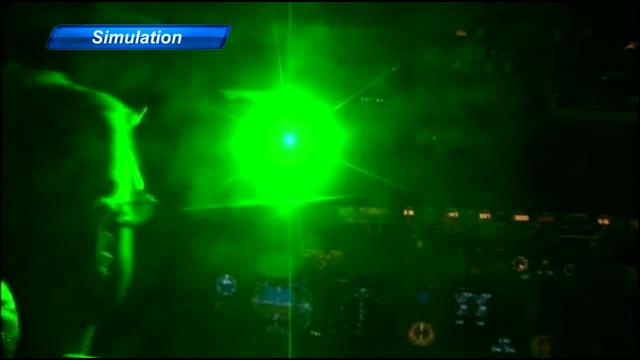
Laser Pointers Blinding Pilots

It's a danger to air travel growing nationwide, and until recently was not a problem in Montana. But, that is starting to change. It's pilots being blinded by laser pointers. KULR-8 News' Emily Nantz tells us why it's a growing problem.
"They call it tagging airplanes or something like and lasering airplanes," says Kevin Ploehn, Director of Aviation & Transit at Billings' Logan International Airport.
It might not seem like a big deal to you and me, but to pilots it's a real danger.
Laser pointers aimed a planes in flight - especially when the planes are taking off or getting ready to land.
"It's a tremendous distraction in the flight deck, it's a very real safety hazard and it brings in the very real possibility of having an airplane accident as the result of this action," says Capt. Robert Hamilton, Airlines Pilots Association International.
Though a pinpoint beam on the ground at a couple of thousand feet, the beam spreads out and it can totally blind a pilot.
"A lot of times it's younger people and they're just goofing off, and what they don't understand that if it hits a pilots eyes and he's say on approach for landing, it's almost like getting a big flashbulb going off in your face, you get that residual can't see anything, so now they are coming in for a landing without any vision," says Ploehn.
In 2005, there were 283 laser incidents. Last year that number was up to 3,960.
Though there were only 7 reported in Billings, and it may be relatively new to our area, but not the airports we fly to including Chicago, Denver, Salt Lake City and Seattle.
"The risks are high for doing it, it's not a good thing, very dangerous, could cause some problems, if you've got a plane with 150 people on it and all of the sudden a pilot can't see, that's not a good thing."
"I wonder how stupid people really can be. I wonder if people really understand that when they shine a laser in the eye of a pilot that they could cause great harm if the pilot is not able to continue to fly the plane safely," says Ray LaHood, former Secretary of Transportation.
The government takes this very seriously, dozens of cases around the country of people going to prison for lasering.
"There has never been a recorded case of an airplane crashing because of the airplane being blinded, the pilot being blinded, but there have been thousands of cases, and it's only a matter of time till something bad happens," says Dan Hargrove, Director of Aviation at Rocky Mountain College.
He knows it's not just planes that could be a problem.
"I'd like to warn anyone that has a laser pointer to really think through what you're going to use it for. And if it's night time and you're out in your backyard and you're just having fun with it, don't put it at a vehicle, don't point it at a moving truck and certainly don't point it at an aircraft cause blinding that person in that piece of machinery obviously can have safety problems."
According to the FBI, the penalty for aiming a laser pointer at a plane and interfering with the operation is a maximum of 20 years in prison and a $250,000 fine.

Monday, 12 May 2014

Ask the Captain: Do pilots argue in the cockpit?

Question: A flight I was on was delayed due to the captain and first officer having some sort of personal disagreement which resulted in the first officer essentially refusing to fly any longer with the captain. Another crew was found to complete the flight. I recognize that air crews are some of the most professional workers out there, but can also see that they aren't immune from the stresses and interpersonal issues we all have in our jobs. Is this common, and how is it handled by the airline?

-- submitted by reader John Scott, Iowa

Answer: Very rarely, personality conflicts arise forcing a change in a flight crew. Pilots are trained in crew resource management to improve communication skills. This training provides tools to help resolve conflicts. If a situation does force an unscheduled change in a crew, both crewmembers usually will have a meeting with their chief pilot to investigate the specific circumstances. Any further action is determined by the recommendation of the chief pilot.

Q: How are captain and first officer assignments determined? Does the individual pilot have a say in who she/he will work with?

-- Bob, Rockville Centre, N.Y.

A: Usually seniority determines when a pilot is eligible for captain training. Upon completing the training, captains will normally fly as only captains. Occasionally two captains will fly when there is shortage of first officers.

Some airlines have an "avoid" capability in the bidding process allowing a pilot to list a pilot that he or she would rather not fly with.

Q: Do the captain and co-pilot fly together every flight?

-- Racman

A: The paring of flight crew varies depending on the size of the operation. It is common for pilots to fly together for a month, then fly with other pilots. The scheduling practices of operators vary greatly. Some are seniority-based, while others are not.

John Cox is a retired airline captain with U.S. Airways and runs his own aviation safety consulting company, Safety Operating Systems.

Friday, 2 May 2014

Audio clip of last words from pilots aboard missing plane MH370 was 'clearly edited'

It is believed the original footage may have been tampered with by Malaysian Authorities or other sources. The recordings, which were published for the first time by the Malaysian government on Thursday, revealed the last contact that air controllers had with flight MH370 before it went missing on March 8.

Almost two months on and the world still calls for answers as investigators still remain baffled by its disappearance. But now audio experts have agreed that the last words heard from the pilots of the flight may have been tampered with in what could be breakthrough for rescuers. Kent Gibson, a forensic audio examiner with Forensic Audio in Los Angeles told NBC News: "You can hear, at 4:07, pages turning or a person breathing, which is unusual.

"It's not unusual that there would be clicks when they push the button on the microphone, but it's very unusual to have a disturbance.
"Normally you wouldn't have any background."

Mr Gibson admitted that the tape could have been recorded by different sources.

He added: "You can assume that the recording while they're still on the ground came from the tower and then you could assume that the communication with air controllers was while they're in the air.

"Unfortunately, there are no smoking guns, except there are edits. And there are clear edits."

He even pointed the finger at Malaysian Authorities editing the footage saying they may have done it, "if the pilot dropped a hint that they didn't want to get out" or "he said something that doesn't fit with the Malaysian government's party line".

But he added: "It's more likely to be an inadvertent thing. But it's not the way to handle evidence."

Other experts say that it sounds like a digital recorder was held up to the speak with background noises heard in the clip. Ed Primeau of Primeau Forensics, who has listened to thousands of hours of footage, said the recording was very strange and parts did not sound like a flight recording.

He said: "At approximately 1:14, the tone of the recording changes, where to me, it sounds like someone is holding a digital recorder up to a speaker, so it's a microphone-to-speaker transfer of that information.

"That's a pretty big deal because it raises the first red flag about there possibly being some editing."

And at two minutes six seconds in, he said: "I can hear a file door being closed, I can hear some papers being shuffled. so I'm further convinced that, beginning at 1:14 continuing through 2:06 to 2:15, it's a digital recorder being held up to a speaker.

"But yet, at 6:17, there's a huge edit because the conversation is cut off. All of a sudden, we go back to the same quality and extremely low noise floor that we had at the beginning of the recording."

Despite the analysis, they seemed to agree that it is still impossible to determine the motives of the crew on board. Over the past eight weeks, searchers from Malaysia, China, Japan, New Zealand, South Korea, Britain , the US and Australia have taken part in the most expensive search in aviation history. Last week, Australian and US authorities confirmed the start of a new search that could take months to complete.

There previous efforts to scale selected areas across the base of the Indian Ocean failed to find any clues.  Families of the 239 missing passengers, who were on board the flight from Kuala Lumpur to Beijing, still remain in the Malaysian capital awaiting answers.

Monday, 21 April 2014

China considers monitoring civilian pilots after disappearance of flight MH370

China is considering the use of military technology that monitors a pilots' in-flight physical and mental state on civilian airliners to improve air safety, according to scientists involved in the research.
The installation of pilot monitoring systems has been discussed by the international aviation industry for years, but the idea is fiercely opposed by pilots on privacy grounds.
After a long delay in recovering Air France flight 447, which crashed into the Atlantic Ocean in 2009 on a flight from Rio de Janeiro to Paris, and the recent disappearance of Malaysia Airlines flight 370 last month, some air safety experts and passengers are calling for increased in-flight monitoring of cockpit crews.
The People's Liberation Army developed a pilot monitoring system that was being used by its air force, the PLA Daily reported in 2005.
Its core components are contained in a lightweight vest which is worn by the pilot.
The 200-gram vest gathered various data, including the pilot's pulse, respiratory rate, muscle movement, body temperature and seating position, constantly relaying the information back to controllers for detailed, real-time assessments of the pilot's physical and mental status.
Professor Zhuang Damin of Beijing University of Aeronautics and Astronautics, who studies the interaction of humans with computers, said authorities were encouraged by the vest's military performance and were interested in potential civilian applications.
Zhuang was lead researcher in a government-funded study to develop a pilot monitoring system for civilian airlines.
"The ultimate goal is to monitor airline pilots as comprehensively as our astronauts," he said.
Zhuang's team developed a cockpit-mounted system to track the precise movements of a pilot's eyes to detect changes in attention level.
Computer and mathematical models were developed based on data findings, with the goal of detecting abnormalities in a pilot's behaviour or voice patterns. Controllers on the ground would receive warnings in the event a behavioural anomaly persisted.
"Our work was at the research stage," Zhuang said. "There was no concrete timetable for implementation."
But Zhuang said the disappearance of flight MH370 en route to Beijing on March 8 might revive the research project.
Professor Li Huijie, a researcher with the Chinese Academy of Sciences' Institute of Psychology, said a cockpit-based pilot monitoring system still faced numerous technological challenges, especially in measuring pilots' mental status.
Reports from such a system were usually based on the assumption that certain behavioural patterns would reflect certain mental states, but the machine could not detect nuances or complex psychological scenarios.
"If a pilot is aware of the installation of such a system on board, he may very likely change his or her behaviour," he said.
An aviation safety expert with the Civil Aviation University of China said that after the crash of Air France flight 447 there were calls to install cameras to monitor flight crews, but pilot opposition had kept cockpits camera-free. "Airline pilots are one of the most respected professions in the world" and felt the introduction of cameras insulted their professionalism, the expert said.
"On long-haul flights pilots will discuss a range of personal and professional topics they don't want to share with controllers," the expert said.

Friday, 21 March 2014

Lufthansa Pilots Vote For Strike

Lufthansa pilots voted for a strike in a dispute over pay and working conditions, union Vereinigung Cockpit (VC) said on Friday.
The union, which represents more than 5,000 Lufthansa pilots, said more than 90 percent of its members voted in favour of a strike.