Showing posts with label China. Show all posts

Friday, 22 August 2014

Chinese pilots told to ditch regional accents

Strong regional accents have long been a handicap in class-ridden Britain. Now pilots in communist China face ejection from the cockpit if their accents fail to pass muster.

Under new rules posted by the Civil Aviation Administration of China on Friday, pilots will have to pass a “level four” test of Mandarin Chinese, China’s official language. Those who speak with an accent that “often impedes” comprehension will not pass.

The CAAC communicated the requirement, which takes effect in January 2016, to pilots in a teleconference earlier this week.

“This is really bad news for anyone with a heavy accent,” one pilot said on his Weibo account, adding an emoticon with sweat pouring off its face.

China’s 56 ethnic groups speak more than 80 languages and dialects. Even native Mandarin speakers can have trouble communicating with each other depending on the strength of their accents, which can be mutually unintelligible.

One flight trainer illustrated the scope for linguistic confusion, especially when common English aviation terms enter the equation. Asked if there is a problem on board, a Chinese pilot might answer in the negative with the words mei you, or “there isn’t”. But someone speaking with a heavy Sichuan accent would pronounce mei you as “may day” – unwittingly parroting the universally recognised distress call.

Like their international counterparts, Chinese aviators have developed codes to avoid confusion stemming from homonyms or near-homonyms. They use the terms yao for one and guai for seven, which are otherwise pronounced yi and qi respectively and easily confused.

The new rule could affect all pilots, who must renew their licence every six years, and adds to a growing list of burdens for the profession.

This year Chinese pilots for flag carrier Air China issued an open letter complaining about the “longer rest, easier routes and higher pay” enjoyed by the airline’s growing number of expatriate hires. They added that the stress on local pilots could “eventually threaten flight safety”.

Chinese pilots must already contend with frequent and lengthy delays, as illustrated by the recent disruption caused by People’s Liberation Army exercises in eastern China, and the irate reactions these often provoke among passengers.

Aviation communication in China can also be affected by factors other than the country’s various accents and dialects. In early July, a China Eastern aircraft’s arrival at Wuhan, capital of central Hubei province, was delayed after an apparent radio blackout with air traffic control that lasted 12 minutes. The two air controllers on duty had fallen asleep.

Wednesday, 20 August 2014

Air traffic control asleep ON DUTY!!!

A Chinese aircraft was forced to delay its landing after two air traffic controllers nodded off, reports said on Tuesday, sparking a wave of online anger about airline safety.

The Boeing 737 was preparing to land at Wuhan airport in central China but had no response from the air traffic control tower for 12 minutes, reports said.

Contact was eventually made and China Eastern Airlines flight MU2528 from Sanya landed safely, the Sina.com news portal said.

“Because air traffic control was asleep on duty, (the plane) called many times,” civil aviation authorities said in a statement quoted by Chinese business magazine Caijing. “But there was no reply, and no contact could be made with the control tower.” A separate investigation report cited by Caijing said two controllers had fallen asleep.

The incident happened on July 8 and the statement was dated July 29. There was no explanation for the delay in making it public.

“Air control work is truly exhausting, but it is unforgivable to sleep on duty,” a post on Sina Weibo, China’s version of Twitter, said Tuesday.

“Hundreds of people’s lives depend on the actions of flight tower controllers. We entrust our lives to you,” the post continued.

Another netizen added: “Such serious consequences. Should let him sleep as much as he wants in prison.”


Saturday, 7 June 2014

Boeing Faces Competition From China

Chinese airlines are expected to purchase about 5,000 new planes in the next 20 years, and the country wants to keep some of the estimated $560 billion at home. To that end, a new company was founded in 2008, Commercial Aircraft Corporation of China, better known as Comac. So far, the Chinese firm has had its own troubles.
Getting a new airplane off the ground is a complicated task. Just ask the folks at Boeing Co. (NYSE: BA), where the first 787 Dreamliners were finally delivered to customers three years late and at massive cost overruns. Comac’s first commercial aircraft is a regional jet, the 90-seat ARJ21, that was being built by a consortium of Chinese aircraft companies, was announced in 2002 and is expected to begin commercial operations next year. The consortium was subsumed by Comac in 2009. The ARJ21 will compete against the regional jets built by Canada’s Bombardier and Brazil’s Embraer S.A. (NYSE: ERJ).
The first plane that Comac has designed from the ground up is the C919, a 158-seat single aisle (narrow-body) plane that will compete with Boeing’s 737 and 737 MAX and the A320 and A320neo from Airbus. The C919 service date was scheduled for 2016, but delays have pushed that date out at least to 2017, and more likely into 2018. The plane’s first test flight was originally scheduled for this year but has been delayed until late next year.
It took Boeing almost nine years to get the 787 into commercial service, so a 10-year timetable for the first commercial plane a country has ever built is not a bad showing. Comac reportedly has orders for 252 ARJ21s and 400 orders for the C919. The airplane leasing arm of General Electric Co. (NYSE: GE), GE Capital Aviation Services, as well as Ryanair Holdings PLC (NASDAQ: RYAAY) and British Airways, are among the 16 customers for the C919.
Comac is also reported to be pairing up with a Russian aircraft maker UAC on development of a dual-aisle, wide-body jet, although no time frame has been announced for that project.
Slicing off 400 of 5,000 planes from the total Chinese demand over the next two decades is just the beginning. And Comac clearly has designs on the international market as well, as the C919′s order demonstrates.

Sunday, 18 May 2014

Airline to link Zagreb with Belgrade and China

Chinese Southeast Europe Business Association (CSEBA) and its partners have announced plans to create a new airline which will launch direct flights between Zagreb and Belgrade, connecting the two cities for the first time in 23 years. In addition, the airline plans to provide charters between Croatia and China, as well as Central Asia. According to the Chinese Southeast Europe Business Association, “ticket prices are expected to be in the range of low cost airlines”. CSEBA President, Mario Rendulić, said in a statement, “There will be tourist air charters between Croatia and China. Chinese tourists are seeking new destinations, and due to recent initiatives by the Croatian Tourism Ministry, the Chinese are very interested in Croatia”.

Croatia has never had direct air links to China. Far off markets like China hold huge potential for Croatia's tourism industry. The number of Chinese tourists visiting Croatia has seen double digit growth for the past few years. In 2013, 43.000 Chinese tourists visited Croatia and spent 65.000 nights in the country, with numbers expected to rise even further this year. CSEBA is looking to tap into this mostly underserved market. On the other hand, flights between Zagreb and Belgrade would be warmly welcomed by the public. However, both Croatia Airlines and the former Jat Airways maintained that the service would be commercially unviable due to good road connections between the two capitals.

Recently, the Croatian Ministry for Sea, Transport and Infrastructure has been pitching Croatia Airlines to Chinese investors. The ministry held talks with Hainan Airlines and China Southern Airlines several months ago in an attempt to interest the carriers in a 49% stake in its national carrier. Furthermore, there have been efforts to lure Chinese airlines to Croatia. Last year, Dubrovnik Airport’s management announced they were in talks with Hainan Airlines in order for it to launch a seasonal service from the resort city of Sanya on Hainan Island in Southern China during the summer. However, the proposed service did not materialise.

Monday, 21 April 2014

China considers monitoring civilian pilots after disappearance of flight MH370

China is considering the use of military technology that monitors a pilots' in-flight physical and mental state on civilian airliners to improve air safety, according to scientists involved in the research.
The installation of pilot monitoring systems has been discussed by the international aviation industry for years, but the idea is fiercely opposed by pilots on privacy grounds.
After a long delay in recovering Air France flight 447, which crashed into the Atlantic Ocean in 2009 on a flight from Rio de Janeiro to Paris, and the recent disappearance of Malaysia Airlines flight 370 last month, some air safety experts and passengers are calling for increased in-flight monitoring of cockpit crews.
The People's Liberation Army developed a pilot monitoring system that was being used by its air force, the PLA Daily reported in 2005.
Its core components are contained in a lightweight vest which is worn by the pilot.
The 200-gram vest gathered various data, including the pilot's pulse, respiratory rate, muscle movement, body temperature and seating position, constantly relaying the information back to controllers for detailed, real-time assessments of the pilot's physical and mental status.
Professor Zhuang Damin of Beijing University of Aeronautics and Astronautics, who studies the interaction of humans with computers, said authorities were encouraged by the vest's military performance and were interested in potential civilian applications.
Zhuang was lead researcher in a government-funded study to develop a pilot monitoring system for civilian airlines.
"The ultimate goal is to monitor airline pilots as comprehensively as our astronauts," he said.
Zhuang's team developed a cockpit-mounted system to track the precise movements of a pilot's eyes to detect changes in attention level.
Computer and mathematical models were developed based on data findings, with the goal of detecting abnormalities in a pilot's behaviour or voice patterns. Controllers on the ground would receive warnings in the event a behavioural anomaly persisted.
"Our work was at the research stage," Zhuang said. "There was no concrete timetable for implementation."
But Zhuang said the disappearance of flight MH370 en route to Beijing on March 8 might revive the research project.
Professor Li Huijie, a researcher with the Chinese Academy of Sciences' Institute of Psychology, said a cockpit-based pilot monitoring system still faced numerous technological challenges, especially in measuring pilots' mental status.
Reports from such a system were usually based on the assumption that certain behavioural patterns would reflect certain mental states, but the machine could not detect nuances or complex psychological scenarios.
"If a pilot is aware of the installation of such a system on board, he may very likely change his or her behaviour," he said.
An aviation safety expert with the Civil Aviation University of China said that after the crash of Air France flight 447 there were calls to install cameras to monitor flight crews, but pilot opposition had kept cockpits camera-free. "Airline pilots are one of the most respected professions in the world" and felt the introduction of cameras insulted their professionalism, the expert said.
"On long-haul flights pilots will discuss a range of personal and professional topics they don't want to share with controllers," the expert said.

Sunday, 23 March 2014

Flight MH370: China sends ships to verify debris

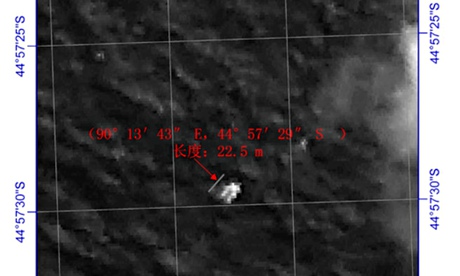
A Chinese satellite has spotted debris in the southern Indian Ocean that could be related to Malaysia Airlines flight MH370, officials said on Saturday, in what is hoped to be a strong lead after two weeks of fruitless searching for the missing aircraft.
Satellite images, taken on 18 March, show an object measuring 22 metres by 13 metres (72ft by 43ft) floating 1,550 miles south-west of Perth, Australia. The suspected debris was spotted 75 miles south-west of another floating object – measuring 24 metres (79 ft) across – that was sighted two days earlier but not yet found.

Thursday, 13 March 2014

China vows to continue search for missing flight MH370

Chinese premier Li Keqiang has said as long as there is a “glimmer of hope” the search will continue for Malaysian Airlines flight MH370.

Flight MH370 from Kuala Lumpur to Beijing went missing late on Friday, with 239 passengers and crew on board.

Monday, 10 March 2014

Blame game erupts as China criticises Malaysia over MH370

Beijing on Monday blamed Kuala Lumpur for a lack of information about a vanished Malaysia Airlines flight, as tearful relatives of the 153 Chinese passengers aboard voiced frustration with all sides of the response effort.
Nearly two-thirds of the 239 people aboard Malaysia Airlines (MAS) flight MH370 were from China, and if the loss of the aircraft is confirmed, it would be China's second-worst air disaster in history.

Friday, 28 February 2014

China To Announce Large A330 Contracts In March

China will announce large contracts for the Airbus A330 next month, say two industry officials familiar with the negotiations.Orders or intended orders for at least 70 and possibly 200 A330s will be revealed when President Xi Jinping and other leaders visit France next month, the officials say. The exact number remains undetermined, and the aircraft may not immediately go into Airbus’s books as definitive orders.They will be among a huge quantity of airliners that China is expected to announce its intent to purchase this year.