Showing posts with label Malaysia 370. Show all posts

Friday, 22 August 2014

What has the aviation industry learned from Flight MH370?

More than five months after Malaysia Airlines Flight 370 vanished from radar screens, there is still no trace of the passenger jet. DW examines what is being done to prevent such an incident from happening again.

The fate of Flight MH370 has been shrouded in mystery ever since the Boeing 777 left Kuala Lumpur for Beijing in the early morning hours of March 8 with 239 people on board. While satellite data suggest the aircraft crashed in the southern Indian Ocean, international search efforts have so far failed to provide any concrete evidence as to the fate of the plane.
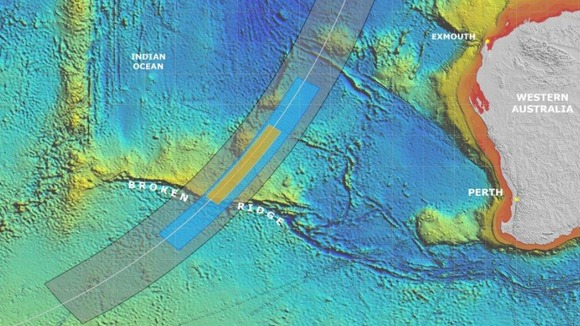
This is why investigators decided to readjust the search south along a narrow arc identified as the most likely resting place of the jet. Australia's Prime Minister Tony Abbott - whose government is contributing to the international search - said the hunt for the plane would resume off the Western Australian coast in September.
Without any identified wreckage, it has been hard to establish facts, thus prolonging the painful wait for the relatives and friends of those gone missing. But the plane's disappearance has also raised questions as to what the aviation industry is prepared to do to prevent such an incident from happening again, especially given that this is not the first time an airplane has disappeared without a trace for months or even years.
It has been well established that Flight MH370 left Kuala Lumpur with no signs of distress and that 26 minutes after departure - while flying somewhere over the South China Sea - the Aircraft Communications Addressing and Reporting System (ACARS), which transmits key information on the plane's mechanical condition, was switched off for reasons still unknown.
How can a plane simply vanish?
The plane then dropped off civilian air traffic control screens after its transponder, which relays information on the plane's location and altitude, was shut down less than an hour into the flight. After the plane was plotted by military radar 45 minutes later, the only other indication as to where the jet was headed came from the analysis of a series of electronic signals known as "handshakes" between the plane and a satellite. But how is it possible that a passenger jet can simply disappear in mid-air in an age when information is just a few clicks away?
A member of the Indonesian Air Force at Medan city military base inspects the Indonesian military search operation for the missing Malaysian Airlines flight MH370 on March 12, 2014 in the area of Malacca Strait, a sea passageway between Indonesia (seen left of the map) and Malaysia (seen top left of the map)
(Photo: ATAR/AFP/Getty Images)
International search efforts have so far failed to provide any concrete evidence as to the fate of the plane
According to aviation expert Chris Yates, one explanation is that the aviation industry is simply not well-equipped in terms of its aircraft tracking capabilities. "The fact of the matter is that the industry has long been behind the times," the UK-based analyst told DW, adding that while there is constantly new technology applicable to the industry, the time it takes to transfer such innovation into the cockpit or airframe can be measured in years if not decades.
"The regulatory framework for airplanes is extremely rigorous because one flawed decision can lead to the loss of aircraft in flight and, as a result, the loss of many lives." Another reason for this is the issue of cost. As Yates explains, airlines universally dislike safety recommendations or requirements that could result in them having to replace systems or parts of an aircraft at potentially huge cost and often fight "tooth and nail" to avoid having to do so.
A 'tracking task force'
Nonetheless, the industry says it is determined to tackle the issue. The International Air Transport Association (IATA) - which represents around 240 airlines - told DW that the aviation sector was committed to making sure that there are no other events where aircraft simply disappear or cannot be located. To this end, IATA's Director General and CEO, Tony Tyler, announced in April that a special task force - the Aircraft Tracking Task Force (ATTF) - would be formed to identify and recommend near-term options for aircraft tracking.
The team's aim is to define a minimum set of performance requirements that any system should meet, thus allowing airlines to make their own decisions about how to best track their aircraft, based on their operations. According to Yates, the ATTF's draft options - set to be presented to the UN's International Civil Aviation Organisation (ICAO) in September - include a host of short, medium and long term goals aimed at better ensuring that information is provided in a timely fashion to the right people in order to support search and rescue, recovery and accident investigation activities.
Enhancing the equipment
Independent aviation expert Heinrich Grossbongardt also points out that aviation authorities in Europe and the US are working on new regulations for the locator beacons of the Flight Data Recorder and the Cockpit Voice Recorder, commonly known as black box. "This will comprise of significant longer battery life and an improved acoustic signal to make it easier to locate the boxes underwater," he says.
The European Aviation Safety Agency (EASA) told DW that the new requirements include the extension of the transmission time of underwater locating devices (ULD), which will be fitted directly to the central part of the aircraft from 30 to 90 days.
The agency also said it proposes to equip large airplanes flying over oceans with a new type of ULD that have a longer locating range than the ULDS installed in currently used flight recorders. Alternatively, aircraft may be equipped with a means to determine the location of an accident within six nautical miles accuracy. In addition, the minimum recording duration of Cockpit Voice Recorders installed on new large aeroplanes should be increased to 20 hours from two hours today, the Cologne-based agency told DW.
There are also ongoing discussions about improving the Emergency Locator Transmitter, a device that automatically sends a signal of distress in case of a crash, which is received through a network of satellites. According to Grossbongardt, improved black boxes with longer battery life and a stronger vibration might take four or five years to be rolled out across the global fleet of long-haul jets.
Oceans and remote areas
Inmarsat, the UK-based satellite company which was able to determine Flight MH370's approximate path after the airliner vanished from radar screens, said that the loss of the plane reinforces the need for all aircraft to be tracked, especially when flying over ocean and other remote airspace, when out of range of ground-based radar systems. "Today, continual tracking of aircraft via satellite communication systems is only mandatory in certain regions of the world and we believe this should immediately be extended to all remote and oceanic routes," Jonathan Sinnatt, Director of Corporate Communications told DW.
A radar screen tracks incoming and outgoing flights for air traffic controllers at the Terminal Radar Approach Control center on July 14, 2011 at the Denver International Airport in Denver, Colorado.
The loss of MH370 reinforces the need for all aircraft to be tracked, especially when out of range of ground-based radar systems, says Inmarsat
The technology for real-time aircraft tracking is already available onboard most modern passenger jets. ADS-C allows for two way communication and is available via satellite, providing connectivity over land and the oceans. ADS-B broadcasts an aircraft’s position but is currently only available when in range of a ground station. But as Grossbongardt points out, the technology had until recently been seen mainly as a way of improving the efficiency of flight operations, but not as an important means of safety.
"Some airlines used it, some did not. This view has changed since MH370", said Grossbongardt, who is also the managing director of Expairtise, a communications agency specializing in aviation and aerospace.
Inmarsat has also pointed to other options such as a "black box in the cloud" service, which would stream black box data from an aircraft to the ground only in the event of a critical event, such as an aircraft performance anomaly. "In the event of a catastrophe while searching for the black box will remain vital to the investigation, having key data immediately available would certainly help in both understanding what has happened and also providing answers for families who may have lost loved ones," Sinnat said.
Live streaming full flight data?
But will this be enough to keep communication lines open with the aircraft? Jörg Handwerg, spokesperson of the German Air Line Pilots' Association 'Vereinigung Cockpit,' is of the view that despite such potential improvements, it will be virtually impossible to prevent airplanes from losing communications under any circumstances, especially if problems with the electrical systems on board emerge.
Handwerg and his association also reject the idea of setting up a system designed to live stream full flight data, given that "too many questions regarding the issue remain unanswered". Some of these questions involve the purpose of the data and where it would be stored, the people allowed to access it, and the measures in place to protect employees from any potential manipulation and misuse of the data.
Pilots in cockpit of Airbus 321 after landing at night
A full flight data live stream to the ground would swamp the currently available broadband bandwidth, say experts
"It would be a complete control of what the pilots do on board, which would not be in accordance with basic principles of labor law in many countries," says Handwerg, who also stresses that setting up such a system would not prevent accidents from happening, but rather lead to increased ticket prices.
Yates points out that there is also a capacity issue that would need to be tackled before a full flight data live stream is even possible: "A significant amount of data is captured and stored on aircraft black boxes and it's widely accepted that a constant live stream to the ground would swamp the available broadband bandwidth."
Tackling the 'blind spot'
The unprecedented tragedy of Flight MH370 has shown that the aviation industry's capabilities of tracking aircraft are limited and should be substantially improved. The sector is only now beginning to address the issue, but as Yates emphasizes, the benefits of implementing effective measures to improve tracking are clear: "This will enhance the ability to fix the location of a downed airliner with a much greater degree of accuracy and thereby significantly enhance the timely search for possible survivors."
According to Grossbongardt, such a move would also help strengthen passengers' trust in the industry: "Everybody is aware that the trust of the flying public in the safety and security of the global air transport system is the basis of the airline industry."
The shadow of a Royal New Zealand Air Force (RNZAF) P3 Orion maritime search aircraft can be seen on low-level clouds as it flies over the southern Indian Ocean looking for missing Malaysian Airlines flight MH370
"Improved tracking will enhance the ability to fix the location of a downed airliner with a much greater degree of accuracy," says Yates
Air traffic has reached today's high level of safety because it learns from every accident and uses the information gained to improve technology, flight operations and regulations. Indeed, every day approximately 100,000 flights take to the sky and land without incident. In 2013, more than three billion people flew and there were 210 fatalities, according to IATA.
However, there will always be a certain degree of uncertainty: "Our system today is a very solid system which is already very good, but as in all other areas of life it is not perfect and it will never be, no matter what technology we use," said Handwerg.
Sunday, 29 June 2014

Lost Malaysia Airlines jet flew for hours on autopilot

Missing Malaysia Airlines Flight 370 flew for hours on autopilot before running out of fuel over the vast Indian Ocean and crashing, a team of international investigators searching for the plane now believe.
Australian officials now leading the international probe said Thursday said further analysis of data revealed that the lost jetliner flew in a straight line after veering off its planned flight from Kuala Lumpur to Beijing, suggesting it was under automatic control.

"Certainly for its path across the Indian Ocean, we are confident that the aircraft was operating on autopilot until it ran out of fuel," Australian Transport Safety Bureau Chief Martin Dolan said at a news conference in Canberra, the nation's capital.


Dolan said someone aboard the doomed jetliner must have switched on the Boeing 777's autopilot before the automatic controls would have taken over the plane's operation.
"The basic assumption would be that if the autopilot is operational it's because it's been switched on," he said, according to the Associated Press.

But officials had no explanation to offer as to why automatic controls would have taken the plane with 239 passengers and crew so far off course, nor could they say when durng the flight the autopilot was activated.


Flight 370 disappeared from radar screens about an hour after taking off March 8 from Kuala Lumpur.


No distress signal was received from the airplane or its crew, and no sign of them has been spotted despite a multi-nation search on the surface and floor of the Indian Ocean.


"We couldn't accurately, nor have we attempted to, fix the moment when it was put on autopilot," Australia's transport minister, Warren Truss, told reporters.


"It will be a matter for the Malaysian-based investigation to look at precisely when it may have been put on autopilot," he said.


Dolan also said investigators now presume the crew of Flight 370 were incapacitated, possibly from oxygen deprivation, as the plane turned south and flew under autopilot.


This would explain why the plane would have lost radio contact with the ground and flew so long without changing course after the initial radical change from its flight plan.


Dolan also offered further explanation of why authorities plan to search a different area of the ocean when search efforts resume in August.


High-powered sonar equipment will be used to scour the new 23,000-square-mile search area, several hundred miles southwest of the previous area that was painstakingly checked over weeks by a high-tech underwater drone.


But the new search area is so large that it could take as long as 12 months to thoroughly check, the AP said.


Tuesday, 24 June 2014

Hunt for MH370 could take ‘decades’, admits airline chief

The hunt for missing Malaysia Airlines Flight MH370 could take “decades”, the company’s British commercial chief has admitted.
Hugh Dunleavy, a former Ministry of Defence employee who became the airline's director of commercial operations in 2012, said he believed something “untoward” had happened to the Boeing 777, which disappeared on March 8 as it flew from Kuala Lumpur to Beijing with 239 people on board.
“Something untoward happened to that plane. I think it made a turn to come back, then a sequence of events overtook it, and it was unable to return to base,” Mr Dunleavy told the Evening Standard.
“I believe it’s somewhere in the south Indian Ocean. But when [a plane] hits the ocean it’s like hitting concrete. The wreckage could be spread over a big area. And there are mountains and canyons in that ocean. I think it could take a really long time to find. We’re talking decades,” he added.
In the days immediately after the plane went missing, a senior Malaysian minister told The Telegraph he feared the search mission would take weeks or months.
“We are in for the long haul,” Hishammuddin Hussein, the acting transport minister, said.
However, even that prognosis proved wildly optimistic. More than three months have now passed since the plane disappeared and no physical trace of it has been found despite a massive multi-national search effort.
On Sunday it emerged that Zaharie Shah, the plane’s captain, had used a flight simulator at his home to plot a flight path to a remote island deep into the southern Indian Ocean, where much of the recent search operation has been focused.
That discovery has rekindled suspicious that the pilot may have hijacked the plane and deliberately steered it off course.
Hishammuddin Hussein, the minister, rejected suggestions that the pilot was now “prime suspect” on Monday. “We should not entertain conspiracy theories,” he told Malaysia’s The Star newspaper.
Mr Dunleavy, who is originally from Ealing, defended his company’s initial response to MH370’s disappearance.
“People say, ‘Why didn’t you work quicker?’ But you’re calling pilots, explaining the situation, waiting for them to send out pings, doing the same to the next plane, then the next, and it’s four in the morning, you don’t have 50 people in the office, only a couple. An hour goes by frighteningly quickly — you realise that the missing plane is now another 600 miles somewhere else.”
However, the airline’s commercial boss criticised the Malaysian government for taking so long to reveal that the missing plane had turned back over the Malay peninsula towards the Strait of Malacca.
“I only heard about this through the news,” Mr Dunleavy said. “I’m thinking, really? You couldn’t have told us that directly? Malaysia’s air traffic control and military radar are in the same freakin’ building. The military saw an aircraft turn and did nothing.”
“They didn’t know it was MH370, their radar just identifies flying objects, yet a plane had gone down and the information about something in the sky turning around didn’t get released by the authorities until after a week. Why? I don’t know. I really wish I did.”

Sunday, 4 May 2014

Conversation between MH370 and Kuala Lumpur air traffic control AUDIO TRANSCRIPT


The Malaysian government has released a recording of the last conversation between the crew of Malaysian Airlines flight MH370 and air traffic controllers in Kuala Lumpur before the plane went off radar on March 8. The flight, heading for Beijing, was carrying 227 passengers and 12 crew members when it disappeared, and is believed to have crashed into the ocean. Repeated searches over a wide area failed to turn up anything.

Friday, 25 April 2014

7 ways air travel changed after air disasters

One of the key questions asked after any serious airline incident is: how do we stop this happening again?
Malaysia Airlines has already changed its cockpit regulations as a result of Flight 370's disappearance.
Many other incidents in the past have led to safer flying conditions for us today, as a result of improvements and changes to protocol, laws and technology in planes. Below we outline some of the most important ones.
These helped pave the way to making 2013 one of the safest years in aviation history according to the Aviation Safety Network, with only 29 known accidents worldwide, and 265 fatalities (the 10-year average is 720 fatalities per year).
1. Collision Avoidance Systems
Collision Avoidance Systems have been a priority in the aerospace industry since the inception of flight.
In 1956, a TWA jet crashed into a United Airlines flight above the Grand Canyon. The incident was the first of many that illustrated the need for increased communication between planes.
A few years later, the Federal Aviation Administration (FAA) was formed to set guidelines for aviation in the United States, but still, issues remained.
Several other two-plane accidents -- including a 1996 collision near New Delhi that resulted in 349 casualties -- emphasized the need for advanced, anti-collision technology.
After a congressional ruling in 1991, the FAA implemented the Traffic Alert and Collision Avoidance System (TCAS), which monitors the airspace around an aircraft independent of air traffic control.
"TCAS really came about in the late '90s, and since then, I don't think we've really seen a collision between two airlines," notes Phil Seymour, president and COO of the International Bureau of Aviation, a consultancy that offers analysis and advice to the aviation industry.
2. Roomier seats
Coach may seem pretty crammed these days, but according to Seymour, there's a limit to how much plane manufacturers are allowed to shave off the space around seats.
In fact, modern-day seat layout has been rigorously calculated to carry out the most effective evacuation.
This is in part thanks to research carried out by the Cranfield Institute after a 1985 incident, when a British Airtours 737 caught fire before take-off at Manchester International Airport.
An engine caught fire, and the flames spread quickly. Unfortunately, the lack of space between seats meant that bottle-necking occurred at the doors, and some passengers couldn't escape.
"The aisles became jammed with people panicking to exit, and there literally wasn't enough space between the seats," recalls Seymour.
"Now, there are limits in terms of the minimum space between seats as well as the distance to an emergency exit."
3. Weather radar
Severe weather has played a role in some crashes, Delta Airlines Flight 191, most notably, which crashed in 1985 while approaching Dallas-Fort Worth International Airport in a thunderstorm.
"Rain is one thing, but if a pilot gets into wind shear, and the currents are there, it will literally just push your aircraft onto the ground. There have been some incidents where aircraft have crashed when making their final approach," says Seymour.
In 1981, the FAA required all turbine-powered commercial planes be installed with wind shear detection systems by 1993. Since then, the models have become increasingly sophisticated.
"A lot of the more advanced weather radar don't just detect bad weather, but predict wind shear. If a pilot sees wind shear coming, instead of landing, he can circle around the airport until it disappears."
4. Manual training
It took two years for search parties to recover the black box from Air France Flight 447, which crashed into the Atlantic Ocean en route to Paris from Rio.
On reviewing the recordings, the French Bureau d'EnquĂȘtes et d'Analyse (BEA) blamed pilot error, in particular an overdependence on the automated flight control system.
"The senior captain was on his break, and the aircraft was being piloted by two less experienced pilots," recalls Seymour. "Since then, Airbus and Boeing have both changed their operation procedures, and have put more focus on manual training," he adds.
In the wake of the incident, Air France also revamped its training procedures, and introduced a new "gatekeeper" position.
Gatekeepers are tasked with contacting the flight crew in the event of an incident and providing pilots with on-the-spot training, tools and advice.
5. Retiring old planes
The FAA addressed the issue of how long planes should fly in 1988 when they created the National Aging Aircraft Research program, which monitors the structural integrity of older planes.
The measure was a result of an Aloha Airlines accident. While flying at 24,000 feet, a large section of the roof blew off, leaving passengers flying in the open air.
The plane -- a Boeing 737 -- was 19 years old, and investigators blamed the incident on the plane's age-related wear and tear.
6. Reviewing repairs
When it comes to making repairs to old aircraft, airlines have also become increasingly stringent.
This is mainly the result of Japan Airlines Flight 123, which crashed in the mountains 62 miles from Tokyo. The crash was the result of a poorly executed repair made several years earlier.
"The repair covered a crack in the bolt head, but many hundreds of flights later, it corroded and the air pressure bolt head just burst open," recalls Seymour.
Boeing responded by monitoring their repairs more closely.
"After that, the types of repairs allowed on an aircraft skin were much more rigorously controlled," says Seymour.
7. Retrieving data
Both the Air France 447 crash and the more recent incident involving Malaysia Airlines Flight 370 have spotlighted the need for better access to data.
"There were several recommendations stemming from AF447, mainly centered around the flight data recorders and, more specifically, on ensuring the ability to locate them more easily and quickly," says Ilias Maragakis, communications officer for the European Aviation Safety Agency (EASA).
In the aftermath of the Air France incident, EASA published a notice of a proposed amendment to retire older recording technologies and recommended that cockpit voice recorders have a minimum recording duration of two hours.
Unfortunately, it may be a while before the necessary changes are implemented.
"Changes to regulations do take time. It's taken almost two decades for aircraft to be manufactured and older aircraft to be modified to have a system that means an empty fuel tank can't explode on an aircraft," Seymour points out.

Saturday, 5 April 2014

Flight 370 search - 'most difficult in human history' - moves underwater

The search for Flight 370 has moved to the depths of the Indian Ocean, as time is running out on the missing Malaysian jetliner’s ability to send signals from its black box.
British and Australian ships are plumbing the vast ocean, using sophisticated equipment on loan from the U.S., to listen for pings from the plane’s black box, but nearly a month after the plane and its 239 passengers and crew vanished, there may not be enough time. The box, or flight data recorder, may soon lose the ability to transmit.
"It is a very difficult search — the most difficult in human history,” Australian Prime Minister Tony Abbott told reporters this week. “But as far as Australia is conc

Tuesday, 25 March 2014

Malaysia 370 lesson learned: It’s time to secure ‘The Black Box’ in ‘The Cloud’

Oliver McGee, former U.S. deputy assistant secretary of transportation for technology policy in the Clinton Administration, and founder of Partnership Possibilities for America, gives his take on mega-technology trends of international aviation safety and security in the next decade and beyond.

When asked recently by Reuters about lessons learned from Malaysia Flight 370, Oliver McGee said, “It’s time to move the black box to ‘the cloud’ at least for essential limited flight recorder data for long flights over (areas) like the Indian Ocean, or other remote areas across large land masses like across the Brazilian Amazon.”