Showing posts with label Jet. Show all posts

Tuesday, 5 August 2014

C-130 Airlifter: The Most Successful Military Aircraft Ever

Later this year, the U.S. Air Force will do something unprecedented. It will sign a contract to purchase more tactical airlifters from a program that first began turning out planes 60 years ago. The latest version of the plane is called the C-130J Super Hercules, and if you measure success in the military aircraft business by how many users a plane has, how many missions it performs, or how long it has been in continuous production, then Hercules is hands down the most successful military aircraft ever. This month marks the 60th anniversary of the plane’s first flight on August 23, 1954.

How long ago was that? Most of the music being sold in the U.S. back then consisted of 78 R.P.M. records. A majority of residential phones were on “party lines,” meaning your neighbor could listen in on your calls. There were only three television networks that mattered, and they broadcast exclusively in black-and-white. Microwave ovens cost thousands of dollars — tens of thousands in today’s dollars — and you couldn’t get a deal on one at WalMart because WalMart didn’t exist. The Worldwide Web would not appear for another 40 years.

The idea that an Air Force contract awarded during the Truman Administration — on July 2, 1951 — could lead to a plane that not only is still in production today, but in high demand around the world, is simply incredible. But it’s true: there are 2,000 C-130s of various vintages and configurations currently in use, and prime-contractor Lockheed Martin LMT +0.7% keeps finding new uses for the plane (the latest versions are for maritime patrol and commercial operations). All of the U.S. armed forces including the Coast Guard depend on Hercules, as do the vast majority of militaries in the Western Hemisphere, Southeast Asia, Western Europe and Arabia.

Two things have made Hercules unique. First, it was conceived as a rugged, versatile airlifter that could meet the transport needs of diverse users by landing almost anywhere with 20 tons of cargo. Second, the Air Force and Lockheed continuously invested in new technology to improve the plane’s performance for six straight decades. So over time it became more than just a mover of people and things — it became an aerial refueler for the Marine Corps, a covert insertion/extraction asset for Air Force special operators, a search-and-rescue plane for the Coast Guard (as featured in The Perfect Storm), a gunship for supporting soldiers on the ground, and a hurricane hunter for the Weather Service.

Seriously, the plane seems capable of doing almost anything. It resupplies bases in Antarctica using skis as landing gear. It conducts harrowing medical evacuations in the hot and dusty climate of Afghanistan. It flies at treetop level to drop flame retardants on forest fires in national parks. It has even been used to deliver “shock and awe” munitions against the dictatorship of Saddam Hussein — weapons so big that they wouldn’t fit on the planes in the U.S. bomber fleet. All of these missions have been accomplished while sustaining one of the lowest accident rates of any U.S. military aircraft.

The latest version of the C-130, the Super Hercules or “J” variant, is emblematic of the continuous improvement philosophy that has made the airframe so successful. With a cruising speed of 400 miles per hour and an unrefueled reach sufficient to fly from New York to San Francisco, Super Hercules provides a 40% gain in range over previous variants, a 20% gain in maximum speed, and needs only 60% of the runway distance to get airborne. It climbs faster and flies higher — even though superficially it looks very much like those earlier planes. The most obvious external difference is the use of new Allison engines with six all-composite blades per engine, a key factor in enhancing the plane’s performance and fuel efficiency.

Super Hercules also is equipped with integrated defensive countermeasures, the latest navigational aids, state-of-the-art displays, and a host of other technological upgrades. But therein lies an important management question for the Air Force. Most of the 400+ C-130s in its fleet lack the sophistication of the Super Hercules, and even with the 71 additional “J” variants the service plans to procure over the period 2015-2020, it will be a long time before the fleet is fully recapitalized. So what should the service do to keep its aging Hercules fleet airworthy as flight standards for civil air space become more demanding? In general, the oldest planes are the ones most likely to be operating in U.S. skies, because they belong to Air National Guard and Air Force Reserve units that have been assigned domestic missions such as disaster relief.

The service had planned to upgrade on-board electronic systems with a “C-130 Avionics Modernization Program” when the new millennium dawned, but as often happens when old aircraft are torn open, that proved to be harder than expected. So now it wants to fund a less costly effort that will just keep the legacy fleet safe to fly until it can be replaced by the newer Super Hercules. Some members of Congress don’t like that idea, because they fear foregoing the existing upgrade program will endanger reserve units in or near their districts. However, the oldest planes in those units are becoming too decrepit to fly, and the C-130 AMP program doesn’t address any of the top-ten drivers of maintenance costs in the legacy fleet.

In fact, some studies indicate that the current upgrade program would only improve mission readiness by a paltry 1% — at a cost of over $10 million per plane. So given budget constraints, the Air Force has concluded it needs to scale back the upgrades and forge ahead with buying replacement aircraft. Studies by the Institute for Defense Analysis and Government Accountability Office — federally funded think tanks — have confirmed the Air Force’s view that cheaper solutions to the electronic needs of the legacy fleet are available. That doesn’t seem to have fazed some legislators, though, who seem more concerned about jobs in their districts than the military utility of the planes. There is a legislative proposal pending to block changes in the AMP effort.

This seems to be a typical example of how narrow-gauge political agendas interfere with military modernization and readiness. The C-130 didn’t become the most successful military aircraft in history as a result of congressional micro-management. It remained relevant over six decades because the Air Force had the resources and discretion to keep its tactical airlift fleet current. Spending billions of dollars to patch up aging aircraft when a low-cost, more capable replacement is readily available makes no operational sense — especially at a time when defense spending is capped by law. If Congress wants to lift the caps, that’s another matter; but if it limits both the availability of funds and the efficiency with which funds can be spent, it will undermine the value of a legendary aircraft.

Friday, 1 August 2014

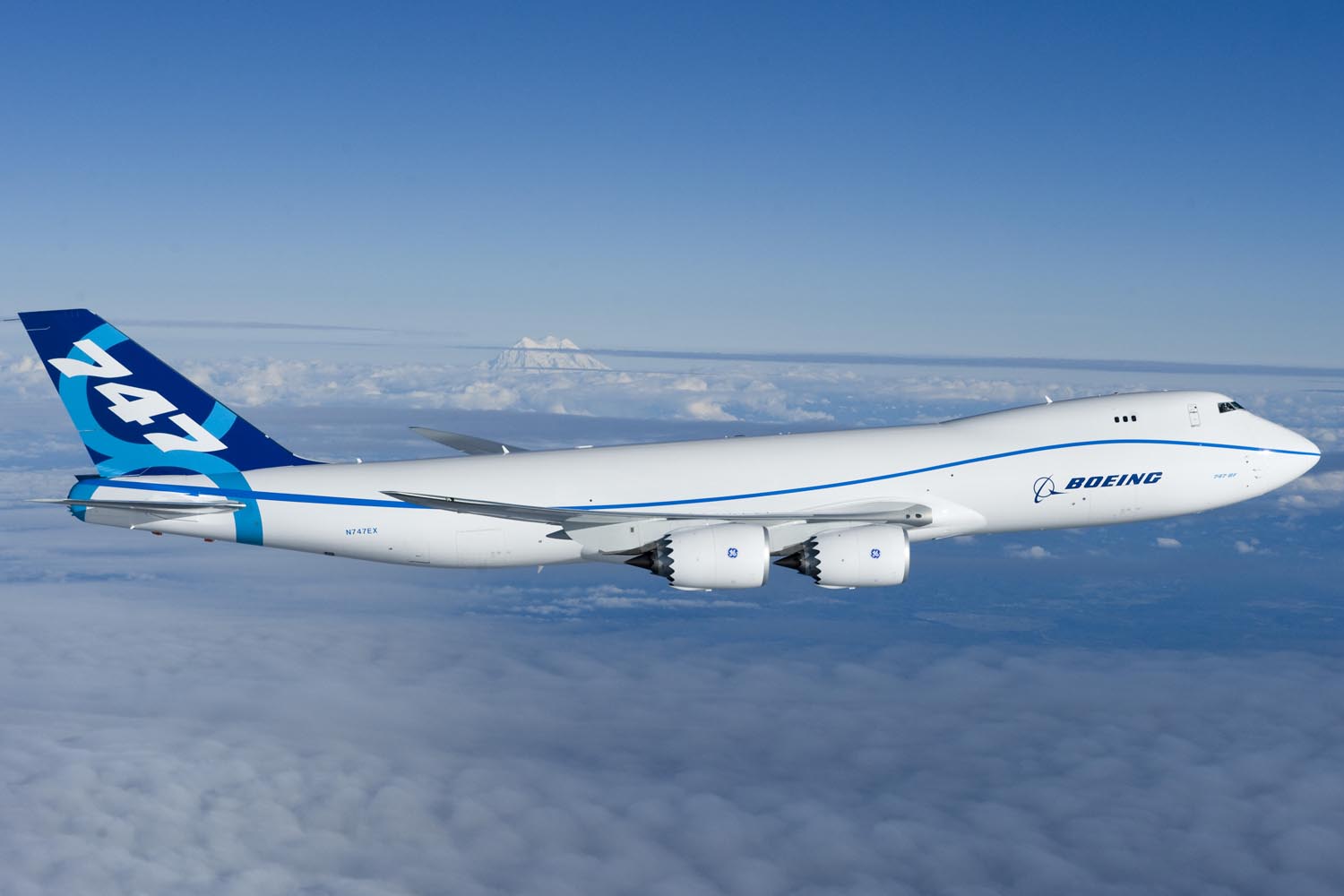
Airbus, Boeing wide-body jet battle triggers warnings of oversupply

Airbus's summer sales campaign with the new A330neo airliner has triggered warnings of potential oversupply in the wide-body market and of a bruising price battle as the older-generation model undercuts rival Boeing's 787 Dreamliner. Two weeks after Airbus announced a revamp of its A330 at the Farnborough Airshow, the battle for wide-body sales is heating up as Delta Air Lines seeks to renew part of its fleet.
The head of the U.S. carrier is so confident of getting a bargain he began negotiating in public, saying he would take the A330neo for barely a third of its $275 million official price. His "high 70s, low 80s" bid was below the market value of such jets - but not by a massive margin, analysts said.
The aerospace industry is focusing on squeezing the maximum life out of existing products following some expensive upsets, including delays and technical problems on the 787 and Airbus's A380 superjumbo. Airbus has upgraded the A330, and Boeing has updated its larger 777, even as both companies pour billions into developing next-generation models such as the 787 and the forthcoming A350.
But big jets bring proportionally bigger risks.
Now a debate is growing over whether the airline market can absorb the industry's older models at the same time as state-of-the-art new ones. That, analysts say, could have a bearing on pricing and margins right across the industry.
"I think particularly in the wide bodies, the market is looking overheated. The herd is running, and the A330neo is the latest example: the market wants the airplane," said Jerrold Lundquist, managing director of the Lundquist Group, who advises private equity investors in aerospace. "There appears to be demand for it now, but it just adds to the ordering.”
Such warnings come on top of investor concerns that a recent boom in aircraft demand is peaking, causing the sector to lag global stocks by 4 percentage points since Farnborough.
"If everyone persists in going full throttle, there could be serious problems at the end of decade," said Richard Aboulafia, vice-president at Virginia-based consultancy Teal Group.
Airbus and Boeing, the world's only manufacturers of large jets, both dismiss talk of an aircraft 'bubble'.
Over the next 20 years, they both see room for over 4,500 jets worth $1 trillion in the 250-300 seat category, where most A330s and 787s are sold. That makes it the largest part of the wide-body jet market by volume and vital to their business.
Buyers of the A330neo and 787 say there is room for both.
"I think there is a nice match. Is it a perfect match? That depends on the how the world economy goes, but when we look at the supply-demand curve, it looks fine to us," said Jeff Knittel, president of U.S. lessor CIT Transportation.
The aircraft may indeed find homes, analysts say, but the question is at what price and whether both planemakers can meanwhile preserve pricing power for their newer jets.
Airbus says it can sell its A330 for 25 percent less than a 787 - the main 787 model is worth $257 million at list prices - and that it can do this without eroding sales of its own A350.
Boeing's business case for the 787 assumed a large premium for carbon-fibre technology over previous metallic jets. It says it can compete with the A330 on value rather than lower prices.
"We think what customers are really interested in is efficiency and lower operating costs in the long term. Operating costs that you pay day in and out are what drive profitability year in and out,” said John Wojick, senior vice president, global sales & marketing, at Boeing Commercial Airplanes.
BOEING OPTIONS
Behind the scenes, many say Boeing is in a mood to fight.
It is expected to compete aggressively to prevent strategic customers from choosing the A330neo over the 787 and trimming its market-share advantage for high-margin, long-haul jets.
To win some flexibility, Boeing may change tactics by introducing segmented 787 pricing to offer discounts to airlines that don't need the aircraft's long range.
But the A330's refusal to die may also force Boeing to renew an attack on costs within the company and its supply chain so that it can shave prices further without sacrificing margins.
Even then, Boeing is expected to look seriously at whether it needs to increase supplies of the 787 to avoid being left out of the market, as Airbus seeks to add to 127 provisional sales.
Boeing is producing 10 787s a month. It plans to increase this to 12 a month in 2016 and 14 by the end of the decade.
Its options include accelerating that build-up or adding an extra step in order to bring production as high as 16 a month.
Some industry-watchers do not rule out a cautious increase in overbooking. The practice of selling more than you make to insure against default is widely used in smaller jets, but is rare for bigger models because they are harder to switch around.
Boeing's Wojick declined to comment on specific options.
His Airbus counterpart John Leahy said he was "not at all" worried about the A330neo destabilising margins or supplies.
"In 2008/9 people were heralding cuts in aircraft production of 35 to 45 percent; they were absolutely certain production cuts were required. What happened? Production wasn’t cut.”
Despite the concerns, some analysts say the jet market, once subject to wild swings, itself has the means to prevent a glut.
Recent output delays have left some older aircraft flying and their retirement would help absorb the new supply, said Adam Pilarski, senior vice president at U.S. consulting firm Avitas.
Despite bitter exchanges at the air show, he doubted Airbus and Boeing would allow themselves to slip into a price war of the kind many people believe they have waged on smaller jets, where they face not just each other but also new competition.

"If Airbus and Boeing have rational thoughts, they should realize there is no competitor there. So why worry, why fight?"

Wednesday, 25 June 2014

Aviation consultant discounts report of Emirates’ interest in 747-8

A Bloomberg report that Boeing is pitching its 747-8 to Emirates Airlines led some to hope that the struggling program was about to get a shot in the arm.
Emirates is the world’s largest operator of the Airbus A380 superjumbo jet.
The airline’s need for better fuel efficiency opened a window of opportunity for Boeing, which is promoting an updated 747, known as the 747-8I or Intercontinental, Boeing senior vice president for sales and marketing at Boeing told Bloomberg.
Boeing is fighting to land new customers for the 747-8.
“Don’t get excited,” a Tuesday report by aviation consulting firm Leeham Co., founded by Scott Hamilton based in Issaquah, Wash, said of the potential interest. “We doubt an order will be forthcoming.”
For one thing, Emirates president Tim Clark has poured cold water on the idea, the report said. Clark said the 747-8 can’t match the Airbus A380 economics.
In addition, it is clear that Emirates’ business model is built around the A380 and the Boeing 777-300ER and 777X, it said.
Spirit AeroSystems builds the nose section, body panels, wing center section, nose gear door and nacelles in Wichita for the 747-8.
Boeing produces 18 of the models a year, or 1.5 a month.
Deliveries peak in 2015 and drop significantly in 2016, even if all options and letters of intent were to be converted, Leeham’s report said.
Until the possible interest by Emirates surfaced, Boeing’s prospects for the 747-8 has been with the Pentagon.
The Air Force is planning to update its 747 Presidential fleet by 2023 and has been studying whether to replace its “Doomsday” fleet of four 747-200 jets, the Air Force told Bloomberg.


Read more here: http://www.kansas.com/2014/06/24/3523665/aviation-consultant-discounts.html#storylink=cpy

Tuesday, 13 May 2014

Airbus Group hopes to put its A350 long-range jet into service by end of year

Airbus Group says airplane orders slumped in the first quarter, but profits rose and it hopes to put its A350 long-range jet into service by the end of the year.
Boeing’s chief rival said in a statement today that it took in 103 orders in the quarter for a total of 21.1 billion euros (£17.2 billion). That is down from 410 orders in the first quarter of 2013.
Chief executive Tom Enders said Airbus isn’t changing its 2014 outlook, which predicts a stable year compared with 2013. But he said the company faces “many challenges” and is focusing on “improvement and restructuring plans”.
The group, formerly known as EADS, saw overall sales up 5% to 12.6 billion euros (£10.2 billion) in the quarter. Profits nearly doubled to 439 million euros (£358 million) in the quarter.


Friday, 18 April 2014

Boeing-Built Fighter Jets Could Launch US Military Satellites Into Space

And you thought space launches couldn't get any cooler: The next generation of small satellites may blast into orbit from the belly of a fighter jet.
The United States military's Defense Advanced Research Projects Agency(DARPA) gave Boeing a $30.6 million contract last month to develop a 24-foot (7.3-meter) launch vehicle that would attach to the bottom of an F-15E Strike Eagle.  

The concept calls for the jet to drop this vehicle when it reaches an altitude of 40,000 feet (12,192 meters), at which point the craft's rocket engines would kick on, carrying onboard satellites into orbit.
This launch system could slash the cost of launching small satellites — those weighing up to 100 pounds (45 kilograms) — by 66 percent if all goes well, Boeing officials said.

The fighter-jet system would not only be a cheaper approach than the usual throwaway rocket stages, officials added, but also would be a quicker way to send satellites into orbit. The United States military would not need to wait around for a launch vehicle to be available or a launch window to open.

"We developed a cost-effective design by moving the engines forward on the launch vehicle," Steve Johnston, Boeing's director of advanced space exploration, said in a statement. "With our design, the first and second stages are powered by the same engines, reducing weight and complexity."

DARPA also wants to reduce the cost of access to space for much bigger payloads. The agency's Experimental Spaceplane project, or XS-1, aims to develop a vehicle capable of launching 3,000- to 5,000-lb (1,361 to 2,268 kg) payloads to orbit for less than $5 million per flight.