Showing posts with label Boeing 737. Show all posts

Friday, 22 August 2014

US Airways retires its last Boeing 737-400

US Airways has retired the last 737 from its pre-merger fleet.

The "Classic" 737-400 model made its final revenue flights for the carrier on Tuesday, FlightGlobal.com reports. The aircraft – tail number N435US – flew from Charlotte to Dallas/Fort Worth to Philadelphia before returning to Charlotte on its final passenger flight for the carrier. The flights operated as US Airways Flight 737.

Piedmont Airlines, which ultimately merged with US Air to become US Airways, was the launch customer for the 737-400, putting the jet into commercial passenger service in the fall of 1988.

American, which now includes US Airways as the airlines progress with their merger, confirmed the retirement of the 737 from US Airways' fleet.

"We're proud to have been the launch customer of the B737-400, which formed an integral part of the US Airways fleet over the years," American says in a statement to Today in the Sky. "American is focused on updating our fleet with hundreds of new planes and refreshing our existing aircraft to bring our customers a more modern, comfortable and connected experience."

American says it has added 53 new mainline aircraft and 18 new regional jets to its fleet so far in 2014.

The 737, of course, will continue to fly in the fleet of the "new" American. AA already had the popular Boeing aircraft in its fleet prior to the merger. And the carrier has more than 150 additional 737s on order.

As for the 737-400 retired by US Airways, its Tuesday flights also marked a milestone for US Airways Captain Jeff Tarr, who retired from the airline after flying the 737-400 on its final flight to Charlotte.

The only U.S. passenger airlines still flying the vintage "-400" model of the 737 on regularly schedule passenger service are Alaska Airlines and PEOPLExpress, FlightGlobal says, citing the Ascend Fleets database. Vision Airlines owns and operates the 737-400s that fly under the PEOPLExpress brand.


Gate C11 at Charlotte shows the departure information for US Airways' last Boeing 737-400 as it began its final day of service for the carrier.(Photo: American Airlines)

Wednesday, 18 June 2014

Boeing 737 MAX Engine Testing Begins in France

CFM International has begun ground testing of its first LEAP-1B aircraft engine that will power the Boeing 737 MAX. CFM is conducting ground-based engine testing at a Safran facility in Villaroche, France. According to Boeing, the engine testing began three days ahead of schedule, and has completed a series of break-in runs, as well as reaching full take-off thrust. 
 
"We are really excited to have this engine on test. Now that we are running at full power, we can really see what it is capable of," said Cédric Goubet, executive vice president for CFM. "All of the testing we have done to date has validated the technology choices we made. The LEAP-1B engine will deliver everything we have promised and more."
 
Boeing's 737 MAX is projected to be 14 percent more fuel efficient than the current in-service Next-Generation 737s. First delivery of the 737 MAX is scheduled for 2017. 
 
Along with the update on LEAP-1B progress, Boeing also issued the following statement about the 737 MAX's projected efficiency against the competing Airbus A320neo, powered by the PurePower PW1100G-JM engine from Pratt & Whitney. 
 

The LEAP-1B engine, installed in a test cell at Snecma (Safran) facilities in Villaroche, France, successfully completed a series of break-in runs before reaching full take-off thrust. Photo, courtesy of Boeing.
"The 737 is more fuel efficient than the A320 today and will be more fuel efficient than the A320neo tomorrow. Airlines operating the 737 MAX will see an 8 percent operating cost per seat advantage over the A320neo," the company said.  

Friday, 13 June 2014

Boeing notches its biggest China order, for 80 737s

Boeing won its biggest order from a Chinese carrier as China Eastern Airlines agreed to buy 80 737 jets valued at $7.4 billion.
China Eastern, the nation’s third-largest airline, will buy a mix of 737-800 and upgraded Max models, to be delivered starting in 2016, the company said in a statement to the Shanghai stock exchange Friday. The carrier is also selling 15 older 737-300s and five 757s back to the planemaker, according to the statement.
The order is a leg up for the world’s largest aircraft maker in its competition with Toulouse, France-based Airbus Group in the market for single-aisle jets, the workhorse of the global airline fleet. More than 50 percent of the commercial jetliners operating in China are Boeing planes, according to the company’s website.
Chinese carriers are bringing in more orders for Chicago- based Boeing and Airbus as growth in the world’s second-largest economy enables more people to fly. That expansion has China on pace to become the world’s biggest aircraft market, making purchasing planes inevitable. At least 13 Chinese airlines, double the existing number, will have a fleet of 100 aircraft each by the end of the decade, market researcher CAPA Centre for Aviation said last month.
China Eastern, based in Shanghai, will fund the purchase with business operations, bank loans and other finances, according to the statement.
Boeing said in February it doesn’t rule out the possibility of building a final assembly line for single-aisle planes in China in the future. Boeing, for four consecutive years, has increased its estimate for demand from China and expects the country to need 5,580 new planes costing $780 billion through 2032.
Airbus, which has an assembly line in Tianjin, China, has forecast that China will supplant the U.S. as the world’s largest market for aircraft by 2032.
In January, Boeing said it delivered a record 143 jets to China last year and expects to hand over a similar number of aircraft in 2014. In February, China said it will further lower the criteria for setting up a budget airline in the country and will study tax breaks for low-cost carriers to make flying more accessible.

Monday, 9 June 2014

Southwest 737 wingtip strikes JetBlue A320 at Boston Logan

A Southwest Airlines Boeing 737 collided with a JetBlue Airways Airbus A320 at Boston Logan airport today while it was pushing back from its gate. The Southwest 737 was departing for a flight to Kansas City. While pushing back, its wingtip struck and damaged the right horizontal stabiliser of the JetBlue A320, which was parked at a neighbouring gate.
There were no passengers or crew on board the A320, registration N643, says JetBlue.
No one was injured in the incident, says Southwest. "The aircraft is out of service for repairs and inspections," it adds. There were 108 passengers on the Southwest 737, who are being re-accommodated on other flights for their journey to Kansas City.

Friday, 6 June 2014

FAA orders Boeing to protect 737s from computer hackers

The Federal Aviation Administration is ordering Boeing to modify the technology aboard late-model 737 aircraft to prevent computer hackers from damaging the planes. The order published Friday in the Federal Register is effective immediately, although the agency allowed a comment period until July 21. The special conditions are urgent because the FAA is trying to avoid slowing down design and delivery of new planes, according to the agency. Doug Alder, a Boeing spokesman, said the special conditions will institutionalize actions that the manufacturer was already taken or planned, in line with similar protections for the 747-8, 777 and 787.

"They are a normal part of the process for introducing new technology or design features not previously addressed by regulation," Alder said. "Special conditions are one way regulators and manufacturers work together to ensure that commercial airplanes are safe and secure."

The latest FAA order applies to 737-700, -700C, -800, -900ER, -7, -8 and -9 aircraft, one of the most popular types of planes for the last 20 years. The special conditions apply to these aircraft because their technology is connected more thoroughly than other planes with computer networks outside the aircraft, making the 737 more vulnerable, according to FAA. The plane's technology "may allow the exploitation of network security vulnerabilities resulting in intentional or unintentional destruction, disruption, degradation, or exploitation of data, systems and networks critical to the safety and maintenance of the airplane," the FAA said.

The order from Jeffrey Duven, manager of FAA's certification services, calls for Boeing to "ensure that the airplanes' electronic systems are protected from access by unauthorized sources external to the plane, including those possibly caused by maintenance activity."

Thursday, 29 May 2014

Alaska Air 737, cargo plane have 'near miss' over Fire Island

An Alaska Airlines Boeing 737 passenger jet and a smaller cargo plane came within a quarter mile of each other in a "near miss" Tuesday above Fire Island, according to the National Transportation Safety Board, the agency charged with investigating the incident. Alaska Flight 135, inbound from Portland, Ore., was about to land at Ted Stevens Anchorage International Airport at 3:08 p.m. on Runway 15, running north-south, when the pilot was instructed by Anchorage air traffic controllers to initiate a "go-around" to avoid an outbound Ace Air Cargo Beechcraft 1900 headed to Sand Point, according to NTSB spokesman Clint Johnson.
As the Alaska Airlines jet carrying 143 passengers and five crew members veered to the right, the Beechcraft also became airborne and veered the same direction, coming within a quarter-mile of the jet at the same elevation above Fire Island, several miles southwest of the airport runway. The close proximity of the aircraft was enough for the agency to count the incident as a "near miss." Johnson said the aircraft were so close at least one pilot spotted the other plane.
Johnson said a "go-around" is a standard procedure to give aircraft more separation near the airport. The Alaska Airlines jet landed without incident. Johnson said the NTSB is just beginning its investigation, headed by a senior air traffic control specialist based in Washington, D.C. The agency will review data from both the Anchorage control tower and the two aircraft involved.
Todd Erickson, Ace Air Cargo's chief pilot, said the Ace aircraft was aware of the situation and in contact with the control tower the entire time.
"There was no danger," Erickson said. "Once Alaska Airlines radioed they had the 1900 in sight, our crew had no cause for concern."
Alaska Airlines spokeswoman Bobbie Egan said Boeing 737 aircraft are equipped with collision avoidance systems, which assist crews in identifying and avoiding other aircraft. She said the system did alert the crew of the proximity of the other aircraft, which prompted the pilots to increase altitude. Egan said the airline plans to work with the NTSB during the course of the investigation.


Read more here: http://www.adn.com/2014/05/28/3490511/alaska-air-737-cargo-plane-have.html?sp=/99/188/#storylink=cpy

Wednesday, 30 April 2014

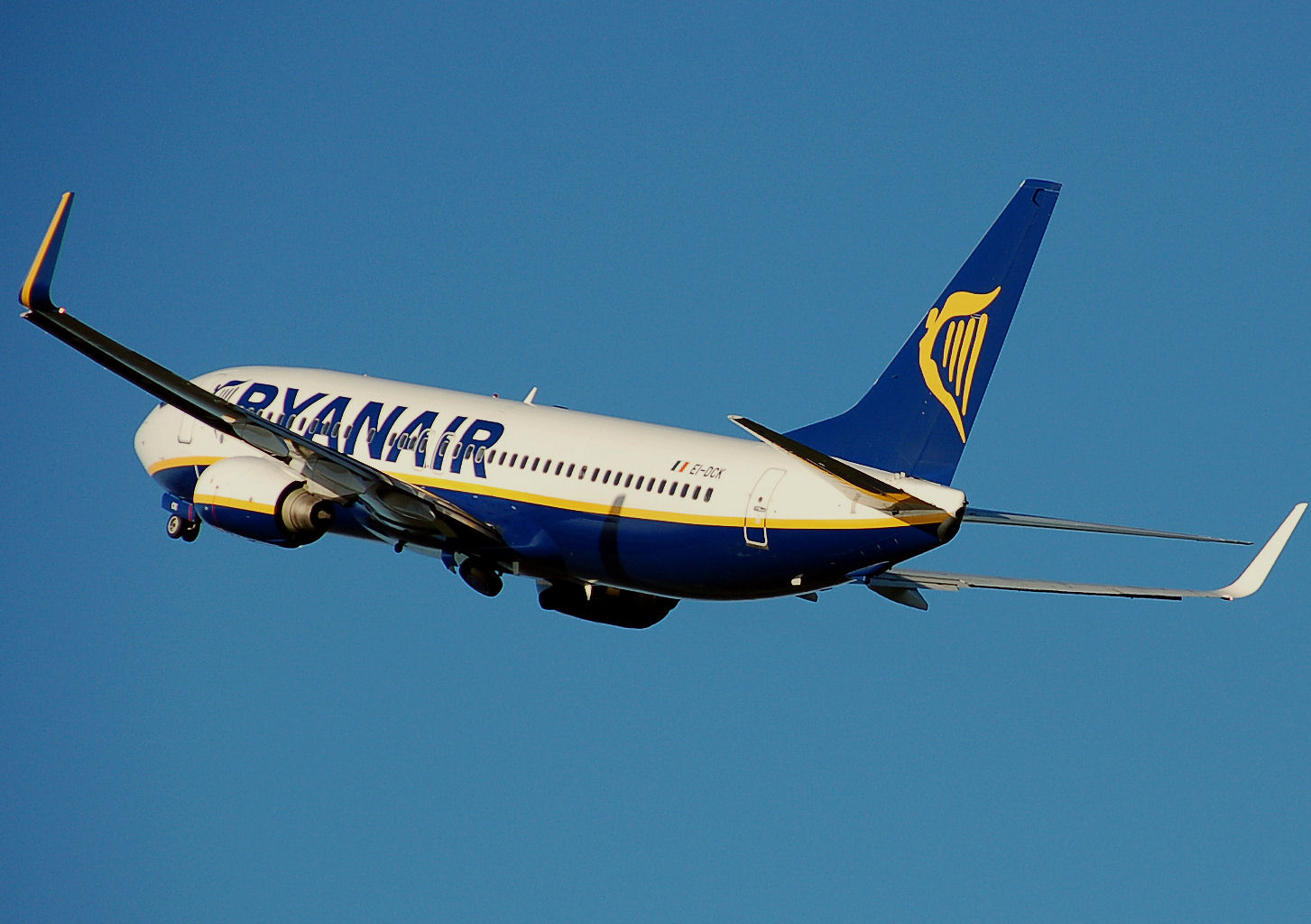
Ryanair buys 5 more Boeing 737-800 series aircaft

Ryanair, Europe’s favourite low fares airline, today (30 Apr) confirmed that it has agreed to buy 5 more 737-800 series aircraft directly from Boeing, 4 of which will be delivered in early Summer 2015, with the 5thin February 2016, in a deal which increases Ryanair’s order book from 175 to 180 new Boeing aircraft.  These 5 new aircraft brings the value of Ryanair’s order book to over $16 billion at current list prices.  Ryanair will now take 21 aircraft deliveries (up from 17) between September 2014 and July 2015, which will enable the airline to open more routes and additional frequencies on existing routes for Summer 2015.

 Ryanair’s Michael O’Leary, said:
 “We are delighted that our partners Boeing have identified 5 new aircraft slots (4 of them before the 2015 Summer peak), which allows Ryanair to increase our order book from 175 to 180 new Boeing 737-800 aircraft.  These new Boeing aircraft enable Ryanair to keep the fleet average age below 5 years, while providing our customers with unmatched punctuality, reliability and an improved customer experience. Now that we have 4 more aircraft (21 in total) for Summer 2015, Ryanair will offer more new routes and increased frequencies to more customers than ever before.” 

 Boeing Commercial Airplanes President and CEO, Ray Conner, said:
 “Ryanair and Boeing share a relationship that spans 20 years. We are honoured that in that time Ryanair has become the largest 737-800 customer in the world – and with today’s announcement have a backlog of 180 airplanes on order. The 737-800 is recognized for its reliable operating performance and will provide Ryanair passengers with the flexibility they need for their low-cost travel.”